English
 Español
 tiếng việt
 русский
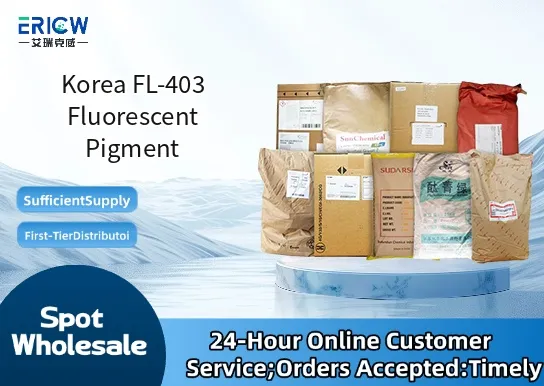
High-intensity fluorescence under UV and daylight illumination.
Excellent thermal stability up to 180°C for processing in extrusion and injection molding.
Good dispersion performance in both polar and non-polar polymer matrices.
Low migration tendency, ensuring color consistency in final products.
Compliant with REACH and RoHS directives for restricted substances.
Fluorescent signage and safety markings for industrial and transportation use.
UV-responsive inks for security printing and authentication labels.
Bright-colored masterbatches for PET, PP, and ABS packaging materials.
Special-effect coatings for automotive trim and consumer electronics housings.
Fluorescent additives in PVC-based flooring and wall coverings.
| Chemical Type | Disazo fluorescent pigment |
| Product Form | Fine free-flowing powder |
| Appearance | Yellow-orange dry powder |
| Primary Applications | Polymer masterbatches, solvent-based inks, and protective coatings |
| Key Features | UV resistance, non-bleeding, low dust generation |
| Benefits | Enhanced visibility, batch-to-batch reproducibility, easy handling |
| Storage Conditions | Store in cool, dry place away from direct sunlight |
| Shelf Life | 24 months from date of manufacture under recommended storage |
Q1: What types of resin systems is Korea FL-403 compatible with?
A: Korea FL-403 demonstrates good compatibility with a broad range of thermoplastic and thermosetting systems, including ABS, PS, PC, PVC, acrylics, and unsaturated polyesters. It is not recommended for high-temperature engineering resins above 280°C without prior thermal stability evaluation.
Q2: How does FL-403 perform under UV exposure and outdoor weathering?
A: FL-403 offers moderate UV resistance in protected applications but is not inherently UV-stabilized. For extended outdoor use, co-addition of HALS-type light stabilizers and UV absorbers is strongly recommended to maintain fluorescence intensity and color fidelity.
Q3: Is FL-403 suitable for food-contact or toy applications?
A: FL-403 is intended for general industrial coloring and decorative applications. It is not pre-certified for food-contact, pharmaceutical, or children’s toy compliance. Regulatory approval must be pursued independently by the end-user based on final formulation, processing conditions, and applicable regional requirements.
Q4: What is the typical dosage range for optimal fluorescence effect?
A: Optimal loading generally ranges from 0.1% to 2% by weight, depending on substrate transparency, desired brightness level, and processing method. Higher concentrations may cause aggregation or reduce mechanical properties—dispersion quality and pigment wetting are critical for consistent performance.
Q5: Can FL-403 be used in aqueous-based coatings or inks?
A: FL-403 is supplied as a hydrophobic organic pigment and is not directly dispersible in water. Successful incorporation into aqueous systems requires appropriate surfactants, dispersing aids, or pre-dispersion via milling in a water-compatible vehicle. Compatibility should be verified through small-scale trials.
Contact With Us:
E-mail: wangxingqiang@ericwchem.com
Have a Questions? Call Us:
Add:
Building A1, Jiete Industrial Park, Huangpu District, Guangzhou City, Guangdong Province, China