English
 Español
 tiếng việt
 русский
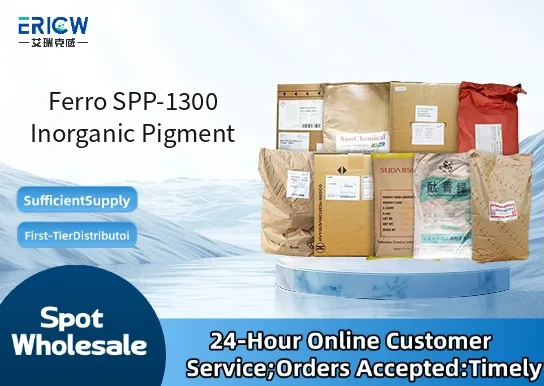
High thermal stability suitable for processing temperatures up to 1200°C.
Excellent chemical resistance to acids, alkalis, and solvents.
Consistent particle size distribution ensuring uniform dispersion and color development.
Non-toxic and compliant with major global regulatory frameworks including REACH and RoHS.
Low oil absorption for efficient incorporation into high-solid-content formulations.
Ceramic glazes and underglaze decorations.
High-performance architectural coatings requiring long-term weatherability.
Plastic colorants for automotive interior components.
Specialty inks for heat-transfer and ceramic decal printing.
Colored concrete and precast building elements.
| Chemical Type | Mixed-metal oxide (spinel-based) |
| Product Form | Fine dry powder |
| Appearance | Free-flowing reddish-brown granular powder |
| Primary Applications | Ceramics, coatings, plastics, construction materials |
| Key Features | Thermal stability, UV resistance, pH inertness |
| Benefits | Color consistency, low migration, minimal batch variation |
| Storage Conditions | Store in cool, dry location; protect from moisture and direct sunlight |
| Shelf Life | 36 months from date of manufacture under recommended storage |
Q1: What is the primary chemical composition and classification of Ferro SPP-1300?
A: Ferro SPP-1300 is a high-performance inorganic pigment based on a stabilized mixed-metal oxide system, engineered for thermal and chemical stability. It is classified as a complex inorganic colored pigment (CICP), not containing regulated heavy metals such as lead, cadmium, or hexavalent chromium.
Q2: Is SPP-1300 suitable for use in food-contact plastics or packaging applications?
A: SPP-1300 is formulated to meet general requirements for food-contact compliance in multiple global markets; however, final regulatory acceptance depends on the specific polymer matrix, processing conditions, and end-use application. Users must conduct full regulatory validation per applicable local legislation before commercial deployment.
Q3: How does SPP-1300 perform under high-temperature processing, such as injection molding or extrusion?
A: SPP-1300 exhibits excellent thermal stability and retains its color integrity at temperatures commonly encountered in polyolefin and engineering plastic processing—typically up to 300 °C for short residence times. It shows minimal degradation or color shift under standard melt-processing conditions.
Q4: What dispersion methods are recommended for optimal color development and consistency?
A: For best results, SPP-1300 should be incorporated using high-shear compounding techniques—such as twin-screw extrusion or intensive batch mixing—to ensure uniform distribution and complete deagglomeration. Pre-dispersed masterbatches are also widely used to simplify handling and improve reproducibility across production runs.
Q5: Can SPP-1300 be used alongside organic pigments or other inorganic colorants in multi-pigment systems?
A: Yes—SPP-1300 demonstrates good compatibility with many common organic pigments and inorganic colorants when properly dispersed. However, due to potential interactions during high-temperature processing, compatibility testing in the final formulation is strongly recommended to confirm color stability and absence of adverse reactions.
Contact With Us:
E-mail: wangxingqiang@ericwchem.com
Have a Questions? Call Us:
Add:
Building A1, Jiete Industrial Park, Huangpu District, Guangzhou City, Guangdong Province, China