English
 Español
 tiếng việt
 русский
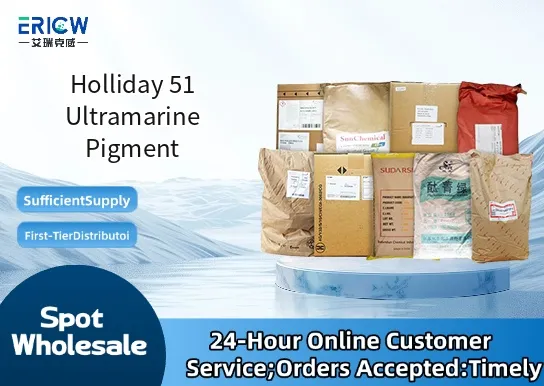
Highly stable sodium aluminosilicate-based pigment with exceptional lightfastness and weather resistance.
Non-toxic, sulfate-free formulation compliant with major global regulatory frameworks for consumer-facing applications.
Consistent particle size distribution ensuring uniform dispersion and minimal sedimentation in liquid systems.
Excellent heat stability up to 250 °C, enabling safe use in thermoplastic compounding and baking enamel processes.
Strong bluing effect with high tinting strength, ideal for optical brightening and neutralizing yellow undertones.
Plastics: Polyolefins, PVC, and engineering resins requiring non-bleeding blue toners.
Inks: Water-based and UV-curable offset, flexo, and screen printing inks for packaging and labeling.
Coatings: Architectural paints, coil coatings, and powder coatings where alkali sensitivity must be avoided.
Construction materials: Colored concrete, stucco, and gypsum-based plasters for interior architectural finishes.
Artists’ materials: High-purity grades for professional-grade watercolors, pastels, and acrylic mediums.
| Chemical Type | Sodium aluminosilicate (sulfur-containing) |
| Product Form | Fine free-flowing powder |
| Appearance | Brilliant violet-blue powder with slight metallic sheen |
| Primary Applications | Plastics, inks, architectural coatings, construction materials, artists’ pigments |
| Key Features | Alkali-stable, non-bleeding, low oil absorption, excellent dispersibility |
| Benefits | Optical brightening, yellow-tone correction, regulatory compliance (REACH, RoHS, FDA 21 CFR 73.1646) |
| pH (10% aqueous suspension) | 9.0–10.5 |
| Loss on Drying (105 °C, 2 h) | ≤ 1.5 wt% |
Q1: What is the primary chemical composition and stability profile of Holliday 51 Ultramarine Pigment?
A: Holliday 51 is a synthetic sodium aluminosilicate-based ultramarine pigment, containing polysulfide chromophores responsible for its intense blue hue. It exhibits good thermal stability up to approximately 180–200 °C in short-term processing, but is sensitive to strong acids and prolonged exposure to high humidity or elevated temperatures above this range.
Q2: Is Holliday 51 suitable for use in food-contact plastics or coatings?
A: Holliday 51 is not intended for direct food-contact applications requiring regulatory clearance for migration compliance. It may be used in non-food-facing industrial coatings or packaging components where regulatory approval is not mandated, subject to end-use risk assessment and applicable local regulations.
Q3: How does Holliday 51 perform in alkaline versus acidic systems?
A: Holliday 51 demonstrates excellent compatibility and color retention in neutral to strongly alkaline environments, such as cementitious systems or alkaline paints. However, it is not recommended for acidic media—exposure to low-pH conditions can cause rapid color fading or complete decoloration due to chromophore degradation.
Q4: What is the typical dosage range when using Holliday 51 in architectural coatings or powder coatings?
A: Dosage depends on desired opacity, shade intensity, and formulation matrix, but Holliday 51 is typically used at low concentrations—generally ranging from 0.1% to 2% by weight relative to the total formulation—to achieve strong chromatic performance without compromising dispersion or film integrity.
Contact With Us:
E-mail: wangxingqiang@ericwchem.com
Have a Questions? Call Us:
Add:
Building A1, Jiete Industrial Park, Huangpu District, Guangzhou City, Guangdong Province, China