English
 Español
 tiếng việt
 русский
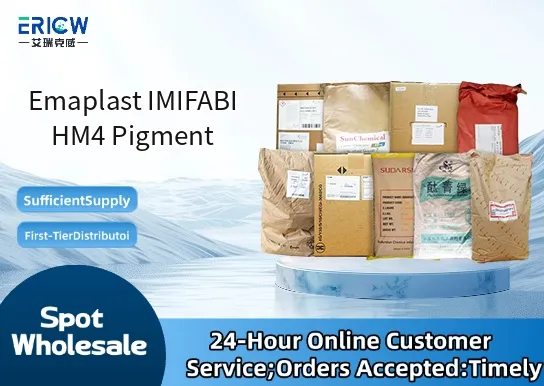
High thermal stability for processing at elevated temperatures up to 280 °C.
Excellent dispersion performance in polyolefin and engineering thermoplastic matrices.
Low migration tendency, ensuring color consistency and compliance with food-contact regulations (EU 10/2011).
UV-resistant formulation providing long-term chromatic stability under outdoor exposure.
Non-dusting granular form for safe handling and reduced airborne particulate risk.
Coloration of injection-molded automotive interior components.
Pigmentation of blow-molded HDPE containers for household and industrial chemicals.
Masterbatch formulation for PP-based fibers in technical textiles.
Coloring of extruded profiles for building & construction applications.
Functional pigment carrier in FDA-compliant medical device housings.
| Chemical Type | Organic pigment dispersion in polyethylene wax carrier |
| Product Form | Free-flowing granules |
| Appearance | Uniform dark blue-black granules |
| Carrier Polymer | Low-density polyethylene (LDPE) |
| Pigment Concentration | 45 wt% (±2%) |
| Heat Stability | Up to 280 °C for 5 min (melt flow index retention ≥90%) |
| Density | 0.92–0.94 g/cm³ |
| Recommended Dosage | 1.5–4.0 wt% depending on final application and opacity requirement |
Q1: What is the primary application of Emaplast IMIFABI HM4 Pigment?
A: Emaplast IMIFABI HM4 Pigment is specifically formulated for coloration of thermoplastic elastomers and polyolefin-based compounds, particularly in applications requiring good thermal stability and dispersion performance during extrusion or injection molding.
Q2: Is this pigment suitable for food-contact or medical-grade polymer formulations?
A: Emaplast IMIFABI HM4 Pigment is designed for industrial and technical applications. While it exhibits good chemical resistance and low volatility, formal compliance with food-contact or medical regulatory frameworks requires full formulation-level testing and validation by the end-user under applicable regional requirements.
Q3: How should Emaplast IMIFABI HM4 Pigment be incorporated into polymer systems?
A: It is typically introduced via masterbatch dilution or direct addition during compounding. For optimal dispersion, pre-drying is recommended if moisture sensitivity is a concern, and processing temperatures should remain within the thermal stability window of the base polymer to avoid pigment degradation.
Q4: Does Emaplast IMIFABI HM4 Pigment offer UV stability in outdoor applications?
A: The pigment demonstrates moderate resistance to UV-induced fading when compounded with appropriate stabilizer packages; however, long-term outdoor durability depends on the overall formulation—including UV absorbers, HALS, and polymer matrix—and environmental exposure conditions.
Contact With Us:
E-mail: wangxingqiang@ericwchem.com
Have a Questions? Call Us:
Add:
Building A1, Jiete Industrial Park, Huangpu District, Guangzhou City, Guangdong Province, China