English
 Español
 tiếng việt
 русский
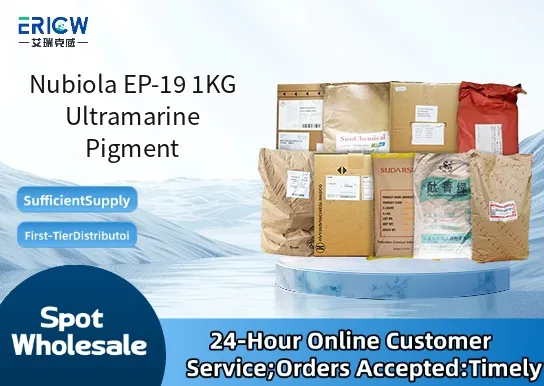
Highly stable ultramarine blue pigment with excellent lightfastness and weather resistance.
Low sulfate content ensures superior compatibility in sensitive polymer and coating systems.
Fine particle size distribution enables smooth dispersion and consistent color development.
Non-toxic, heavy-metal-free formulation compliant with global regulatory standards (e.g., EN 71-3, REACH).
Optimized for high tinting strength and clean, bright blue hue in both aqueous and solvent-based media.
Architectural and industrial waterborne coatings.
Plastic coloration for polyolefins, PVC, and engineering thermoplastics.
Printing inks, especially for packaging and security applications.
Artist-grade acrylics, gouaches, and decorative plasters.
Concrete and stucco pigmentation for exterior façade systems.
| Chemical Type | Sodium aluminosilicate sulfide (Ultramarine Blue) |
| Product Form | Free-flowing fine powder |
| Appearance | Intense violet-blue powder, uniform granulation |
| Primary Applications | Coatings, plastics, inks, construction materials, artists' colors |
| Key Features | Lightfastness ≥7 (ISO 105-B02), heat stability up to 180°C |
| Benefits | Alkali-resistant, non-bleeding, low migration in polymers |
| pH Stability Range | 6.5 – 9.5 (aqueous dispersions) |
| Packaging | 1 kg sealed aluminum-laminated pouch, palletized per customer request |
Q1: What is the primary chemical composition and stability profile of Nubiola EP-19?
A: Nubiola EP-19 is a high-purity synthetic ultramarine pigment based on a sodium aluminosilicate matrix with polysulfide chromophores. It exhibits excellent lightfastness and thermal stability up to approximately 180–200 °C in short-term processing conditions, though prolonged exposure above 150 °C may lead to gradual color shift in sensitive systems.
Q2: Is EP-19 suitable for use in acidic environments or low-pH formulations?
A: No — ultramarine pigments, including EP-19, are inherently sensitive to acidic conditions. Exposure to pH below ~5.5 can cause irreversible decomposition, resulting in loss of blue/violet intensity and potential formation of hydrogen sulfide odor. It is recommended for neutral to alkaline systems only.
Q3: How does EP-19 perform in polymer applications such as polyolefins or PVC?
A: EP-19 demonstrates good dispersion and color development in rigid PVC and certain engineering thermoplastics under controlled processing temperatures. In polyolefins, performance depends heavily on carrier compatibility and thermal history; it is generally less preferred than more heat-stable alternatives unless used at low concentrations and with optimized stabilization packages.
Q4: What is the typical dosage range when using EP-19 in industrial coatings or printing inks?
A: Dosage depends on the desired shade strength and substrate opacity, but EP-19 is typically used at low concentrations — generally ranging from 0.1% to 2% by weight in final formulations. Higher loadings may increase viscosity or affect film integrity, so optimization is recommended for each application matrix.
Q5: Does EP-19 contain heavy metals or meet common regulatory requirements for consumer-facing products?
A: EP-19 is free of regulated heavy metals such as lead, cadmium, mercury, and hexavalent chromium. It complies with major global pigment safety frameworks for general industrial use; however, suitability for specific end-uses (e.g., toys, cosmetics, food-contact materials) requires evaluation against applicable regional regulations and formulation testing.
Contact With Us:
E-mail: wangxingqiang@ericwchem.com
Have a Questions? Call Us:
Add:
Building A1, Jiete Industrial Park, Huangpu District, Guangzhou City, Guangdong Province, China