English
 Español
 tiếng việt
 русский
High thermal stability up to 280°C for demanding processing conditions.
Excellent lightfastness and weather resistance (rated ISO 105-B02: 7–8).
Low volatility and negligible migration in polymer matrices.
Optimized particle size distribution for uniform dispersion and enhanced color strength.
Compliant with major global regulatory frameworks including REACH and RoHS.
Engineering plastics including polyamide (PA), polypropylene (PP), and polycarbonate (PC).
Automotive interior and exterior components requiring long-term UV durability.
Food-contact-grade packaging films and containers (subject to local compliance verification).
High-performance industrial coatings for architectural and agricultural equipment.
Masterbatch formulations for color concentrate production.
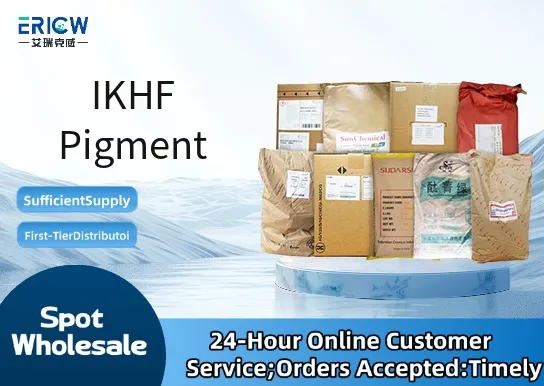
| Chemical Type | High-performance organic pigment (quinacridone-based) |
| Product Form | Free-flowing fine powder |
| Appearance | Uniform red-violet hue, dust-free granules |
| Primary Applications | Polymer coloring, coating systems, masterbatches |
| Key Features | Heat stability, low extractables, high tinctorial strength |
| Benefits | Consistent batch-to-batch color match, reduced dosage requirements |
| Storage Conditions | Store in dry, cool, well-ventilated area below 30°C; avoid direct sunlight |
| Shelf Life | 24 months from date of manufacture under recommended storage |
Q1: What types of polymer systems is IKHF Pigment compatible with?
A: IKHF Pigment is engineered for broad compatibility with thermoplastics including polyolefins (PP, PE), engineering plastics (ABS, PS, PC), and certain thermoplastic elastomers. It demonstrates good dispersion stability during melt processing and minimal impact on mechanical properties when properly incorporated.
Q2: Is IKHF Pigment suitable for food-contact applications?
A: IKHF Pigment is formulated without heavy metals or intentionally added restricted substances, and is intended for use in applications where regulatory compliance is determined by the final compound manufacturer. End-use suitability for food contact requires full system evaluation, including migration testing and verification against applicable regional regulations.
Q3: How should IKHF Pigment be dispersed in polymer melts?
A: Optimal dispersion is achieved using standard compounding equipment such as twin-screw extruders. Pre-blending with carrier resin or masterbatch dilution prior to final processing is recommended to ensure uniform distribution and avoid agglomeration. Processing temperature should remain within the thermal stability window of the base polymer.
Q4: Does IKHF Pigment offer UV stability in outdoor applications?
A: IKHF Pigment exhibits inherent resistance to UV-induced fading due to its chemically stable molecular structure. For extended outdoor exposure, synergistic stabilization with appropriate HALS or UV absorbers is recommended to maximize long-term color retention and polymer integrity.
Contact With Us:
E-mail: wangxingqiang@ericwchem.com
Have a Questions? Call Us:
Add:
Building A1, Jiete Industrial Park, Huangpu District, Guangzhou City, Guangdong Province, China