English
 Español
 tiếng việt
 русский
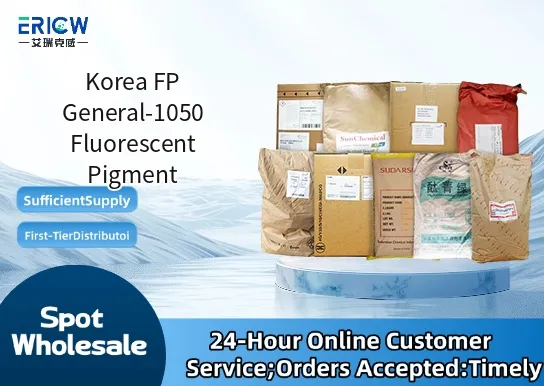
High-intensity fluorescence under UV and daylight illumination.
Excellent thermal stability up to 220°C for extrusion and compounding processes.
Good compatibility with common thermoplastics including PVC, PS, ABS, and acrylics.
Low migration tendency, ensuring color consistency in end-use applications.
Non-heavy-metal formulation compliant with RoHS and REACH requirements.
Safety signage and high-visibility markings for transportation and construction.
UV-responsive packaging films and labels for brand differentiation.
Fluorescent inks for security printing and anti-counterfeiting features.
Decorative plastics in consumer electronics housings and automotive interior trim.
Specialty masterbatches for injection-molded promotional items and toys.
| Chemical Type | Organic fluorescent dye dispersed in polymeric carrier |
| Product Form | Free-flowing granular masterbatch |
| Appearance | Bright yellow-green granules |
| Primary Applications | Thermoplastic compounds, coatings, and inks |
| Key Features | UV-stable, low-volatility, non-bleeding |
| Recommended Loading Range | 0.5–3.0 wt% depending on substrate and intensity requirement |
| Storage Conditions | Keep sealed in cool, dry place below 30°C; avoid direct sunlight |
| Regulatory Compliance | REACH registered; RoHS 2011/65/EU compliant; no SVHC substances above threshold |
Q1: What types of resins and polymers is General-1050 compatible with?
A: General-1050 demonstrates good compatibility with a broad range of thermoplastic and thermosetting systems, including ABS, PS, PVC, acrylics, polyesters, and epoxy-based coatings. Performance may vary depending on resin polarity and processing temperature, so compatibility testing under actual production conditions is recommended.
Q2: How does General-1050 perform under UV exposure and outdoor weathering?
A: As a fluorescent pigment, General-1050 delivers strong chromatic brightness under UV-A and daylight sources. However, its photostability is moderate — prolonged direct UV exposure without protective topcoats or UV stabilizers may lead to gradual fluorescence attenuation. For extended outdoor applications, co-addition of HALS-type light stabilizers is advised.
Q3: What is the recommended dispersion method for optimal fluorescence intensity?
A: To maximize color strength and uniform fluorescence, General-1050 should be fully dispersed using high-shear mixing or three-roll milling. Avoid excessive heat or mechanical degradation during compounding, as this may reduce particle integrity and diminish optical performance. Pre-dispersed masterbatches are also widely used for consistent results.
Q4: Is General-1050 suitable for food-contact or pharmaceutical packaging applications?
A: General-1050 is not certified for direct food-contact or pharmaceutical use. It is intended for general industrial, decorative, and functional applications where regulatory compliance for ingestion or biomedical exposure is not required. Customers requiring such approvals must conduct full regulatory evaluation and obtain appropriate third-party verification.
Q5: What is the typical dosage range in polymer and coating formulations?
A: Dosage depends on the desired fluorescence intensity and substrate opacity, but General-1050 is typically used at low concentrations — generally ranging from 0.1% to 2% by weight in final formulations. Higher loadings do not always improve performance and may compromise dispersion stability or mechanical properties.
Contact With Us:
E-mail: wangxingqiang@ericwchem.com
Have a Questions? Call Us:
Add:
Building A1, Jiete Industrial Park, Huangpu District, Guangzhou City, Guangdong Province, China