English
 Español
 tiếng việt
 русский
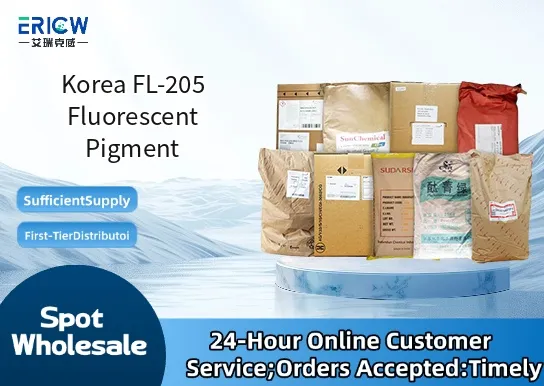
High-intensity fluorescence under UV and daylight illumination
Excellent thermal stability up to 220°C for processing in polymer melts
Good dispersion performance in both polar and non-polar resin systems
Low migration tendency in PVC, ABS, and polycarbonate matrices
Compliant with REACH and RoHS directives for restricted substances
Security printing inks for banknotes and ID documents
Fluorescent masterbatches for automotive interior trim
UV-responsive coatings for safety signage and emergency egress markings
Special-effect inks for packaging and promotional materials
Fluorescent additives in engineering plastics for medical device housings
| Chemical Type | Disazo-based fluorescent organic pigment |
| Product Form | Free-flowing powder |
| Appearance | Bright yellow-green powder |
| Primary Applications | Plastics, inks, and coatings requiring high visibility fluorescence |
| Key Features | UV-stable, non-bleeding, solvent-resistant |
| Benefits | Enables low-dose formulation with strong chromatic impact |
| Storage Conditions | Store in cool, dry place below 30°C; protect from direct sunlight |
| Regulatory Status | Non-hazardous per GHS; SDS available upon request |
Q1: What types of resin systems is Korea FL-205 compatible with?
A: Korea FL-205 exhibits good compatibility with a wide range of thermoplastic and thermosetting systems, including ABS, PS, PVC, acrylics, polyesters, and epoxy resins. It is not recommended for use in highly polar or strongly acidic media without prior compatibility testing.
Q2: How does FL-205 perform under UV exposure and elevated processing temperatures?
A: FL-205 offers moderate UV stability in opaque formulations but may experience gradual fluorescence intensity reduction under prolonged direct UV exposure. It maintains pigment integrity during standard melt processing (e.g., injection molding, extrusion) up to approximately 220°C for short residence times.
Q3: What is the typical dosage range for achieving strong fluorescent effect?
A: The optimal loading level depends on substrate transparency, desired intensity, and application method, but it is typically used at low concentrations—generally ranging from 0.1% to 2% by weight in the final formulation.
Q4: Is FL-205 suitable for applications requiring regulatory compliance for consumer goods?
A: FL-205 is intended for industrial and non-food-contact applications. For regulated end uses—including toys, cosmetics, or food packaging—formulators must conduct full regulatory assessment based on regional requirements and final product composition.
Contact With Us:
E-mail: wangxingqiang@ericwchem.com
Have a Questions? Call Us:
Add:
Building A1, Jiete Industrial Park, Huangpu District, Guangzhou City, Guangdong Province, China