English
 Español
 tiếng việt
 русский
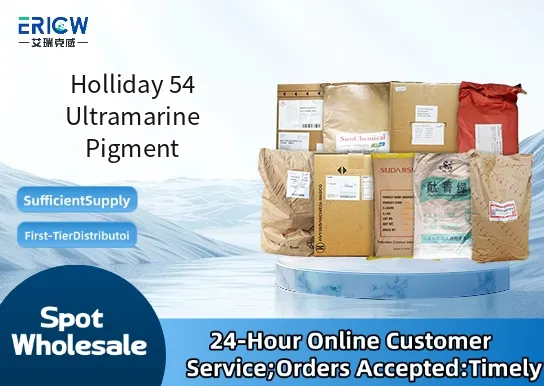
High chroma, intense blue-violet hue with excellent lightfastness and weather resistance.
Thermally stable up to 250°C, suitable for medium-temperature processing applications.
Non-toxic, sulfate-free formulation compliant with major global regulatory frameworks (e.g., EN 71-3, RoHS).
Excellent dispersion stability in aqueous and polar organic systems without flocculation.
Low oil absorption (< 45 g/100g), enabling high pigment loading and efficient formulation viscosity control.
Architectural and industrial coatings requiring durable, non-fading blue tones.
Plastic coloration for polyolefins, ABS, and PVC in extrusion and injection molding processes.
Masterbatch production for synthetic fibers and packaging films.
Printing inks for flexible packaging and corrugated board where heat resistance is critical.
Construction materials including colored concrete, stucco, and dry-mix mortars.
| Chemical Type | Sodium aluminosilicate sulfur complex |
| Product Form | Fine free-flowing powder |
| Appearance | Deep violet-blue granular powder |
| Primary Applications | Coatings, plastics, inks, construction materials |
| Key Features | Lightfastness: ISO 105-B02 Class 7–8; Heat stability: ≤250°C |
| Benefits | Non-bleeding, alkali-stable, low heavy metal content |
| pH (5% aqueous suspension) | 9.0–10.5 |
| Volatile Matter (105°C, 2h) | ≤1.5% |
Q1: What is the primary chemical composition and structural basis of Holliday 54 Ultramarine Pigment?
A: Holliday 54 is a synthetic sodium aluminosilicate pigment with a sodalite-type crystalline structure, incorporating polysulfide anions responsible for its intense blue hue. It contains no heavy metals such as lead, cadmium, or chromium, and is inherently inorganic and thermally stable.
Q2: Is Holliday 54 suitable for use in applications requiring resistance to alkaline environments?
A: Yes — ultramarine pigments like Holliday 54 exhibit excellent stability in mildly to moderately alkaline systems, including cementitious coatings, plaster, and certain alkaline detergents. However, they are not recommended for strongly acidic or chlorinated media, where color degradation may occur.
Q3: How does Holliday 54 perform under UV exposure and elevated temperature conditions?
A: Holliday 54 demonstrates good inherent lightfastness and thermal stability up to approximately 250 °C in dry, inert atmospheres. Prolonged direct UV exposure in clear polymer matrices or outdoor weathering applications may lead to gradual fading; for demanding exterior uses, co-stabilization or alternative pigments are often evaluated.
Q4: Can Holliday 54 be dispersed effectively in water-based systems without specialized surfactants?
A: While Holliday 54 is inherently hydrophilic due to its ionic surface character, optimal dispersion in aqueous formulations typically benefits from conventional anionic or nonionic dispersants. Pre-wetting and controlled shear mixing are recommended to minimize agglomeration and ensure uniform color development.
Q5: What types of resin systems are most compatible with Holliday 54 in industrial coatings and plastics?
A: Holliday 54 performs well in unsaturated polyesters, epoxy resins, alkyds, and PVC plastisols. It is generally avoided in acid-cured amino-formaldehyde systems and highly reactive isocyanate-containing polyurethanes, where potential chemical interaction may affect hue or dispersion stability.
Contact With Us:
E-mail: wangxingqiang@ericwchem.com
Have a Questions? Call Us:
Add:
Building A1, Jiete Industrial Park, Huangpu District, Guangzhou City, Guangdong Province, China