English
 Español
 tiếng việt
 русский
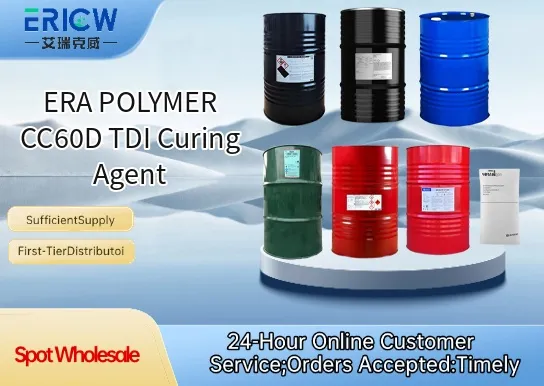
High reactivity with hydroxyl-terminated polyether and polyester polyols for rapid gelation and short demold times.
Excellent compatibility with aromatic and aliphatic polyol systems, ensuring homogeneous dispersion and stable formulations.
Delivers superior mechanical strength and abrasion resistance in cured elastomeric and rigid polyurethane products.
Low volatility and controlled exotherm profile, enhancing process safety and casting consistency.
Stable shelf life under recommended storage conditions (dry, cool, nitrogen-blanketed environment).
Cast elastomer wheels and rollers for material handling equipment.
High-performance polyurethane adhesives and sealants requiring fast cure and thermal stability.
Rigid foam insulation panels for construction and refrigeration applications.
Automotive bushings, gaskets, and vibration-damping components.
Industrial coatings and linings requiring chemical resistance and impact resilience.
| Chemical Type | Aromatic diisocyanate-based curing agent (TDI-derived prepolymer) |
| Product Form | Liquid |
| Appearance | Clear to pale yellow viscous liquid |
| NCO Content (wt%) | 8.5 – 9.2% |
| Viscosity (25°C, mPa·s) | 250 – 450 |
| Density (25°C, g/cm³) | 1.18 – 1.22 |
| Storage Stability | ≥12 months at ≤25°C in sealed, dry, nitrogen-blanketed container |
| Primary Applications | Polyurethane elastomers, rigid foams, adhesives, and coatings |
Q1: What is the primary function of ERA POLYMER CC60D TDI Curing Agent in polyurethane systems?
A: CC60D is a TDI-based aromatic curing agent designed to react with hydroxyl-terminated prepolymers or resins, enabling rapid crosslinking and development of high mechanical strength, abrasion resistance, and thermal stability in final polyurethane elastomers and coatings.
Q2: Is CC60D compatible with aliphatic polyol systems, or is it limited to aromatic formulations?
A: While CC60D is optimized for use with aromatic polyols and prepolymers—where its reactivity and performance profile are fully leveraged—it can be incorporated into certain hybrid or semi-aliphatic systems. However, compatibility and cure kinetics should be verified experimentally, as reduced reactivity and potential phase separation may occur with highly aliphatic components.
Q3: How does CC60D compare to MDI-based curing agents in terms of pot life and cure speed?
A: Due to its TDI backbone, CC60D generally offers faster initial reactivity and shorter pot life compared to most MDI-based alternatives, making it suitable for applications requiring rapid demolding or high-throughput casting. Final cure development remains robust, though ambient moisture sensitivity is higher and handling precautions are recommended.
Q4: What storage conditions are recommended to maintain product stability?
A: Store CC60D in tightly sealed containers under dry, inert atmosphere (e.g., nitrogen blanket), at temperatures between 15–25°C. Avoid exposure to moisture, heat above 40°C, and direct sunlight. Prolonged storage or improper sealing may lead to dimerization or surface skinning due to its inherent TDI reactivity.
Q5: Can CC60D be used in solvent-free or low-VOC formulations?
A: Yes—CC60D is a liquid, low-viscosity curing agent that can be formulated without solvents. It is commonly employed in 100% solids polyurethane systems; however, VOC content of the final formulation depends on the full system composition, including any residual monomer or co-reactants.
Contact With Us:
E-mail: wangxingqiang@ericwchem.com
Have a Questions? Call Us:
Add:
Building A1, Jiete Industrial Park, Huangpu District, Guangzhou City, Guangdong Province, China