English
 Español
 tiếng việt
 русский
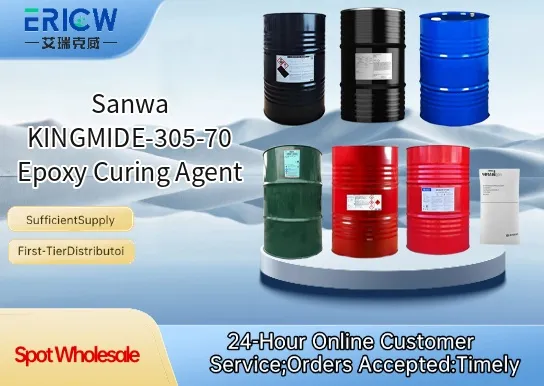
Low-viscosity liquid formulation enabling excellent mixability with standard epoxy resins.
Room-temperature curing capability with balanced pot life and rapid development of mechanical strength.
High thermal stability and excellent chemical resistance post-cure, particularly against solvents and weak acids.
Low volatility and minimal odor, supporting safer handling in ventilated industrial environments.
Compatible with bisphenol-A and novolac epoxy systems for broad formulation flexibility.
Electrical encapsulation and potting compounds for power electronics and transformers.
Structural adhesives in automotive and rail transportation assemblies.
Protective coatings for metal substrates in industrial maintenance and corrosion protection.
Composite matrix resins for filament-wound pipes and pressure vessels.
Tooling and mold-making compounds requiring dimensional stability and low exotherm.
| Chemical Type | Amine-based aliphatic polyamine adduct |
| Product Form | Clear to pale yellow liquid |
| Appearance | Homogeneous, free of sediment or haze |
| Specific Gravity (25°C) | 0.98–1.02 g/cm³ |
| Viscosity (25°C) | 350–550 mPa·s |
| Amine Value | 380–420 mg KOH/g |
| Reactivity Profile | Medium reactivity; gel time ~60–90 min at 25°C with DGEBA resin (1:1 w/w) |
| Storage Stability | ≥12 months at 5–25°C in sealed original container |
Q1: What is the primary functional role of KINGMIDE-305-70 in epoxy systems?
A: KINGMIDE-305-70 is a latent, amine-based curing agent designed to provide controlled reactivity and extended pot life at ambient temperatures, while enabling rapid and thorough crosslinking upon thermal activation—ideal for one-component (1K) epoxy formulations requiring storage stability and precise processing control.
Q2: How does KINGMIDE-305-70 compare to conventional DICY or aromatic amine hardeners in terms of handling and safety?
A: Unlike highly reactive aromatic amines, KINGMIDE-305-70 exhibits low volatility and reduced skin sensitization potential under normal handling conditions. It is non-hazardous for transport (UN classification not required) and does not require special respiratory protection during standard mixing operations—though good industrial hygiene practices should always be followed.
Q3: What types of epoxy resins is KINGMIDE-305-70 typically compatible with?
A: It demonstrates broad compatibility with standard liquid and solid bisphenol-A/F-type epoxy resins, as well as novolac epoxies. Performance may vary with highly branched or cycloaliphatic epoxies, so formulation-specific compatibility testing is recommended prior to scale-up.
Q4: What is the typical activation temperature range for full cure?
A: Full network development generally occurs between 130 °C and 160 °C, with cure time dependent on thermal mass and desired final properties. Lower temperatures (e.g., 100–120 °C) may yield partial cure suitable for pre-bake or tack-free stages, but are not recommended for final performance-critical applications.
Contact With Us:
E-mail: wangxingqiang@ericwchem.com
Have a Questions? Call Us:
Add:
Building A1, Jiete Industrial Park, Huangpu District, Guangzhou City, Guangdong Province, China