English
 Español
 tiếng việt
 русский
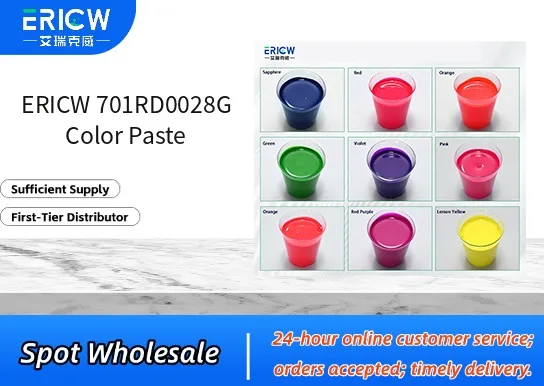
High chroma red dispersion with excellent color strength and batch-to-batch consistency.
Optimized for compatibility with water-based acrylic, vinyl acetate, and styrene-acrylic emulsions.
Low volatile organic compound (VOC) content, supporting sustainable formulation requirements.
Good lightfastness and thermal stability up to 120°C during processing.
Non-settling rheology with long-term storage stability (≥12 months at 5–30°C).
Architectural interior and exterior waterborne wall paints.
Industrial maintenance coatings for metal and concrete substrates.
Water-based wood stains and clear finishes requiring vibrant red tones.
Printing inks for packaging applications on paper and board substrates.
Plastic color concentrates for polyolefin and PVC compounds.
| Chemical Type | Organic pigment dispersion (Quinacridone-based) |
| Product Form | Liquid color paste |
| Appearance | Viscous, homogeneous red paste with no visible particles or separation |
| Primary Applications | Water-based architectural coatings, industrial coatings, printing inks, plastic coloration |
| Key Features | High tinting strength, low VOC, excellent dispersion stability |
| Benefits | Reduced formulation complexity, improved color reproducibility, extended shelf life |
| pH Range | 7.5 – 8.5 |
| Storage Conditions | 5–30°C, protect from freezing and direct sunlight |
Q1: What is the primary application field for ERICW 701RD0028G Color Paste?
A: ERICW 701RD0028G is specifically formulated for coloring polyolefin-based compounds, including PP and HDPE, commonly used in injection molding, blow molding, and extrusion applications—especially where high thermal stability and dispersion performance are required.
Q2: Is ERICW 701RD0028G compatible with food-contact plastic materials?
A: This color paste is designed for use in plastics intended for non-food-contact applications. For food-contact compliance, users must conduct full regulatory evaluation—including migration testing—based on their final formulation, processing conditions, and target market requirements.
Q3: How should ERICW 701RD0028G be incorporated into polymer systems?
A: It is typically introduced via masterbatch dilution or direct dry blending prior to melt processing. Good mechanical mixing and adequate residence time in the extruder or injection unit are recommended to ensure uniform dispersion and optimal color development.
Q4: Does ERICW 701RD0028G contain heavy metals or restricted substances?
A: The formulation complies with major global restrictions on intentionally added heavy metals such as lead, cadmium, mercury, and hexavalent chromium. However, users are advised to verify conformance against applicable regional regulations based on their specific end-use and manufacturing context.
Q5: What is the typical dosage range for achieving full opacity and consistent shade?
A: Dosage depends on the base resin, desired color strength, and processing method, but it is generally used at low concentrations—typically ranging from 0.1% to 2% by weight relative to the polymer matrix.
Contact With Us:
E-mail: wangxingqiang@ericwchem.com
Have a Questions? Call Us:
Add:
Building A1, Jiete Industrial Park, Huangpu District, Guangzhou City, Guangdong Province, China