English
 Español
 tiếng việt
 русский
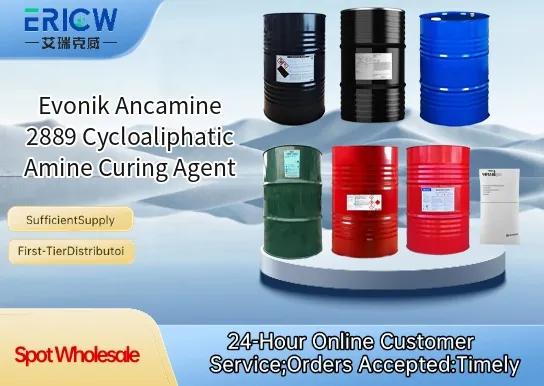
Low viscosity for excellent processability and easy handling in resin systems.
Fast-reacting cycloaliphatic amine chemistry enabling rapid cure at ambient or moderate elevated temperatures.
Superior chemical resistance, particularly to solvents, acids, and alkalis, after full cure.
Excellent mechanical properties including high hardness, toughness, and adhesion to diverse substrates.
Low volatility and low odor profile, supporting safer industrial handling and improved workplace air quality.
High-performance epoxy flooring and industrial coatings for warehouses and cleanrooms.
Electrical encapsulation and potting compounds for transformers, sensors, and power electronics.
Composite matrix resins for wind turbine blades and aerospace structural components.
Marine and offshore protective coatings requiring long-term corrosion resistance.
Adhesives and structural bonding systems in transportation and heavy machinery manufacturing.
| Chemical Type | Cycloaliphatic amine |
| Product Form | Liquid |
| Appearance | Pale yellow to amber clear liquid |
| Primary Applications | Epoxy resin curing agent for coatings, composites, and electrical encapsulation |
| Key Features | Ambient-cure capability, low viscosity, low volatility, high thermal stability |
| Benefits | Improved productivity, enhanced durability, reduced VOC emissions, broad formulation compatibility |
| Storage Stability | Stable under dry, cool conditions (≤25°C) in original sealed container |
| Reactivity Profile | Reactive with standard bisphenol-A and bisphenol-F epoxy resins |
Q1: What are the key handling and safety considerations for Ancamine 2889?
A: Ancamine 2889 is a reactive amine curing agent and should be handled with appropriate personal protective equipment (PPE), including chemical-resistant gloves and eye protection. It is advisable to use in well-ventilated areas and avoid prolonged or repeated skin contact due to its potential sensitizing properties. Refer to the current Safety Data Sheet (SDS) for detailed handling, storage, and first-aid information.
Q2: How does Ancamine 2889 compare to aromatic amine hardeners in terms of performance and processing?
A: Unlike aromatic amines, Ancamine 2889 is a cycloaliphatic amine offering improved UV stability, lower color development, and reduced volatility. It typically provides faster ambient-cure response than many aliphatic amines while maintaining good pot life and mechanical properties in epoxy systems—making it suitable for applications where aesthetics and surface quality are critical.
Q3: Is Ancamine 2889 compatible with standard bisphenol-A and bisphenol-F epoxy resins?
A: Yes, Ancamine 2889 demonstrates broad compatibility with common liquid and solid epoxy resins, including bisphenol-A and bisphenol-F types. It is commonly used in formulated coatings, adhesives, and composites where balanced reactivity, low viscosity, and high glass transition temperature (Tg) are desired.
Q4: What is the typical dosage range for Ancamine 2889 in epoxy formulations?
A: Dosage depends on the specific epoxy resin, desired cure profile, and end-use requirements. Ancamine 2889 is generally used at low concentrations relative to the epoxy equivalent weight (EEW), often ranging from 0.1% to 2% by weight of the total formulation—but optimal levels must be determined experimentally for each system.
Contact With Us:
E-mail: wangxingqiang@ericwchem.com
Have a Questions? Call Us:
Add:
Building A1, Jiete Industrial Park, Huangpu District, Guangzhou City, Guangdong Province, China