English
 Español
 tiếng việt
 русский
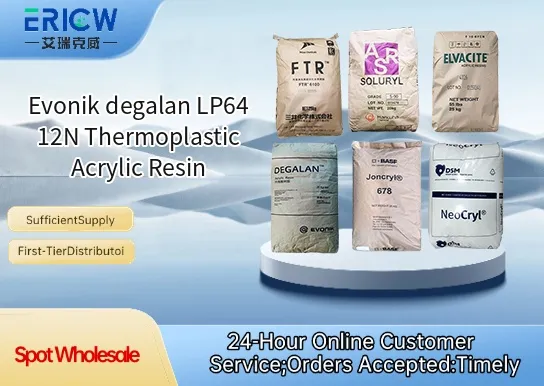
High molecular weight thermoplastic acrylic resin offering excellent film-forming capability and mechanical strength.
Outstanding clarity and UV stability for long-term optical performance in demanding applications.
Good solubility in common organic solvents including esters, ketones, and aromatic hydrocarbons.
Low yellowing tendency and excellent weather resistance due to saturated carbon backbone structure.
Compatible with a broad range of coatings additives, plasticizers, and other thermoplastic resins.
High-gloss automotive clearcoats and topcoats requiring exceptional durability and gloss retention.
Industrial maintenance coatings for metal substrates exposed to outdoor environments.
Plastic coatings for ABS, PC, and PVC substrates in consumer electronics and appliance housings.
Overprint varnishes and protective coatings for flexible packaging and label films.
Adhesive modifiers and binder components in specialty pressure-sensitive adhesive formulations.
| Chemical Type | Thermoplastic acrylic copolymer |
| Product Form | Powder or granular solid |
| Appearance | White to off-white free-flowing granules |
| Primary Applications | Coatings, adhesives, and plastic modification |
| Key Features | High clarity, UV stability, solvent solubility, low yellowing |
| Benefits | Enhanced gloss, weather resistance, substrate adhesion, and formulation flexibility |
| Storage Conditions | Store in cool, dry place; protect from moisture and direct sunlight |
| Regulatory Compliance | REACH compliant; not classified as hazardous under CLP Regulation |
Q1: What are the primary application areas for DEGALAN® LP64 12N?
A: DEGALAN® LP64 12N is widely used as a rheology modifier and film-forming aid in solvent-based and high-solids coatings, including automotive refinish, industrial maintenance, and wood finishes. It also serves as a binder or additive in specialty inks and overprint varnishes where thermoplastic acrylic performance—such as gloss retention, clarity, and recoatability—is required.
Q2: How does DEGALAN® LP64 12N differ from other thermoplastic acrylic resins in terms of solubility and compatibility?
A: DEGALAN® LP64 12N exhibits broad solubility in common organic solvents—including esters, ketones, and aromatic hydrocarbons—and demonstrates good compatibility with many other film formers such as nitrocellulose, alkyds, polyurethanes, and melamine resins. Its low molecular weight and linear structure contribute to rapid dissolution and minimal viscosity impact at typical use levels.
Q3: Is DEGALAN® LP64 12N suitable for food-contact applications?
A: DEGALAN® LP64 12N is not pre-approved for direct food contact. While it may be considered for use in certain indirect food-contact coatings (e.g., outer packaging), final regulatory compliance depends on the full formulation, processing conditions, and applicable regional requirements. Customers must conduct their own evaluation and obtain appropriate regulatory clearance before use in such applications.
Q4: What is the recommended dosage range for DEGALAN® LP64 12N in coating formulations?
A: Dosage is formulation-dependent, but DEGALAN® LP64 12N is typically used at low concentrations—generally ranging from 0.1% to 2% by weight relative to total solids—to achieve desired rheological control, surface enhancement, or film integrity without compromising drying behavior or clarity.
Contact With Us:
E-mail: wangxingqiang@ericwchem.com
Have a Questions? Call Us:
Add:
Building A1, Jiete Industrial Park, Huangpu District, Guangzhou City, Guangdong Province, China