English
 Español
 tiếng việt
 русский
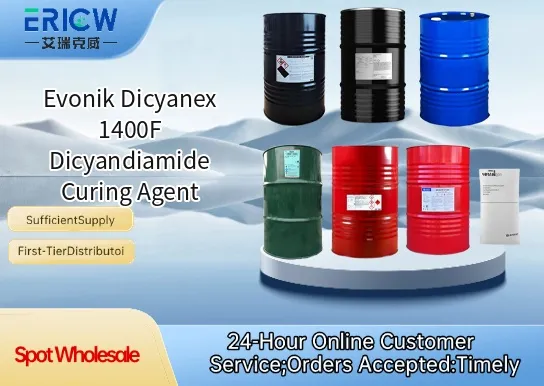
High-purity dicyandiamide formulation optimized for consistent epoxy resin curing performance.
Enhanced thermal stability enabling reliable processing at elevated temperatures without premature decomposition.
Low volatility and excellent storage stability under ambient conditions, minimizing handling risks.
Controlled reactivity profile allowing extended pot life and precise gel time management in industrial formulations.
Free-flowing powder with uniform particle size distribution for improved dispersion in epoxy systems.
Electrical insulation materials for high-voltage equipment and transformers.
Structural adhesives requiring high glass transition temperature (Tg) and dimensional stability.
Encapsulants and potting compounds used in automotive electronics and power modules.
Prepregs and laminates for printed circuit board (PCB) substrates demanding flame retardancy and low ionic impurities.
Composite matrices for aerospace and wind energy components requiring long-term thermo-oxidative resistance.
| Chemical Type | Dicyandiamide (DICY) |
| Product Form | Fine white crystalline powder |
| Appearance | White to off-white free-flowing powder |
| Purity (by HPLC) | ≥ 99.5 % |
| Moisture Content | ≤ 0.2 % (w/w) |
| Particle Size (d₅₀) | Approx. 15–25 µm |
| pH (1% aqueous suspension) | 6.5–7.5 |
| Primary Applications | Epoxy resin curing agent for high-performance composites and electrical applications |
Q1: What is the primary function of Dicyanex 1400F in epoxy resin systems?
A: Dicyanex 1400F is a dicyandiamide-based latent curing agent designed to provide controlled reactivity and extended pot life at ambient temperature, while enabling rapid and efficient crosslinking upon thermal activation—typically above 140 °C.
Q2: How does Dicyanex 1400F differ from standard dicyandiamide (DICY) powders?
A: Dicyanex 1400F is a specially formulated, micronized, and surface-treated grade of dicyandiamide offering improved dispersibility in epoxy resins, reduced dust generation during handling, and more consistent cure performance compared to conventional DICY.
Q3: Is Dicyanex 1400F compatible with common liquid and solid epoxy resins?
A: Yes, it demonstrates broad compatibility with standard bisphenol-A and bisphenol-F epoxies, as well as novolac-type resins—both in solvent-based, solvent-free, and powder coating formulations.
Q4: What are typical processing conditions for full cure with Dicyanex 1400F?
A: Full cure is generally achieved with thermal treatment in the range of 150–180 °C for 15–45 minutes, depending on part geometry, formulation composition, and desired final properties. Lower temperatures may be used with extended dwell times or co-catalysts.
Q5: How should Dicyanex 1400F be stored to maintain its latent reactivity?
A: Store in original sealed packaging under cool, dry conditions—preferably below 25 °C and with low humidity—to prevent premature moisture absorption and ensure long-term storage stability and consistent latency.
Contact With Us:
E-mail: wangxingqiang@ericwchem.com
Have a Questions? Call Us:
Add:
Building A1, Jiete Industrial Park, Huangpu District, Guangzhou City, Guangdong Province, China