English
 Español
 tiếng việt
 русский
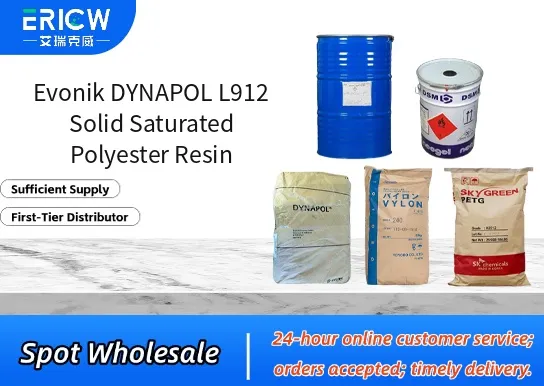
Highly crosslinkable solid saturated polyester resin with excellent compatibility in powder coating formulations.
Outstanding gloss retention and weather resistance due to fully saturated backbone and low acid value.
Optimized melt viscosity for smooth film formation and excellent flow/leveling in thermosetting powder coatings.
Low volatile organic content (VOC-free), supporting sustainable and regulatory-compliant coating systems.
Consistent batch-to-batch performance and high thermal stability during curing at standard powder coating temperatures.
Architectural powder coatings for aluminum extrusions and curtain walls.
Appliance coatings for refrigerators, ovens, and washing machines.
Automotive non-structural parts such as trim, grilles, and under-hood components.
General industrial coatings for metal furniture, lighting fixtures, and HVAC equipment.
Functional topcoats requiring long-term UV stability and chemical resistance.
| Chemical Type | Solid saturated polyester resin |
| Product Form | Free-flowing granules |
| Appearance | Off-white to light yellow granules |
| Acid Value (mg KOH/g) | 24–28 |
| Gardner Color | ≤ 3 |
| Melt Viscosity (mPa·s at 200 °C) | 4,500–6,500 |
| Softening Point (°C, Ring & Ball) | 68–74 |
| Hydroxyl Value (mg KOH/g) | 15–19 |
Q1: What is the primary application area for DYNAPOL L912?
A: DYNAPOL L912 is primarily used as a binder resin in high-performance powder coatings for architectural, industrial, and appliance applications—especially where excellent gloss retention, mechanical durability, and weather resistance are required.
Q2: Is DYNAPOL L912 compatible with common curing agents for polyester-based powder coatings?
A: Yes, it is specifically designed to be compatible with standard triglycidyl isocyanurate (TGIC) and hydroxyalkyl amide (HAA) crosslinkers, enabling flexible formulation options for both TGIC-free and TGIC-containing systems.
Q3: How does DYNAPOL L912 contribute to film formation and surface quality?
A: Its well-balanced molecular weight distribution and low melt viscosity promote excellent flow, leveling, and edge coverage during curing—resulting in smooth, uniform films with high gloss and minimal orange peel.
Q4: What handling and storage conditions are recommended for optimal stability?
A: Store in a cool, dry place below 30 °C, protected from moisture and direct sunlight. Keep containers tightly sealed to prevent agglomeration or moisture uptake, which may affect flow behavior during extrusion.
Contact With Us:
E-mail: wangxingqiang@ericwchem.com
Have a Questions? Call Us:
Add:
Building A1, Jiete Industrial Park, Huangpu District, Guangzhou City, Guangdong Province, China