English
 Español
 tiếng việt
 русский
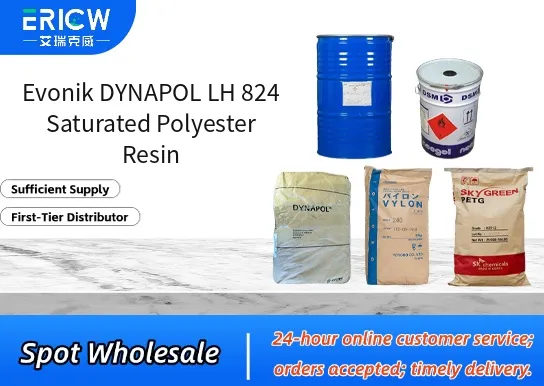
High chemical resistance to solvents, acids, and alkalis in cured coatings.
Excellent weatherability and UV stability for long-term outdoor performance.
Low viscosity enabling high solids formulation with good flow and leveling.
Outstanding hardness and scratch resistance after crosslinking with melamine or isocyanate curing agents.
Good compatibility with common acrylics, cellulose acetate butyrate (CAB), and plasticizers.
Automotive OEM clearcoats and topcoats.
Industrial maintenance coatings for metal structures and equipment.
Powder coating formulations for architectural aluminum profiles.
High-performance coil coatings for pre-painted metal sheets.
General-purpose protective coatings for agricultural and construction machinery.
| Chemical Type | Saturated polyester resin |
| Product Form | Clear, viscous liquid |
| Appearance | Colorless to pale yellow, transparent |
| Primary Applications | High-solids liquid coatings, powder coatings, coil coatings |
| Key Features | High crosslink density, low VOC potential, excellent film integrity |
| Benefits | Enhanced durability, reduced baking time, improved substrate adhesion |
| Recommended Curing Agents | Melamine-formaldehyde resins, blocked isocyanates |
| Storage Conditions | Store in tightly closed containers at 15–25 °C; avoid freezing and prolonged exposure to moisture |
Q1: What is the primary application of DYNAPOL LH 824 in coating systems?
A: DYNAPOL LH 824 is a low-viscosity, saturated polyester resin designed primarily as a reactive diluent and binder component in high-performance UV-curable powder coatings, especially for heat-sensitive substrates such as wood composites and plastics.
Q2: How does DYNAPOL LH 824 contribute to film formation in UV-curable powder coatings?
A: It functions as a low-melting, flow-promoting binder that enables smooth film formation during the melt stage prior to UV curing. Its saturated structure supports excellent weather resistance and long-term stability in the final cured film.
Q3: Is DYNAPOL LH 824 compatible with common photoinitiators used in UV powder systems?
A: Yes, it demonstrates good compatibility with standard cationic and free-radical photoinitiators, including iodonium and sulfonium salts, as well as acylphosphine oxides—enabling efficient crosslinking under typical UV-A/UV-V irradiation conditions.
Q4: What handling precautions should be observed when processing DYNAPOL LH 824?
A: As a thermoplastic solid at room temperature, it should be stored in a cool, dry place away from direct sunlight. During processing, standard industrial hygiene practices apply—including appropriate ventilation and personal protective equipment—to minimize inhalation of dust or contact with molten material.
Contact With Us:
E-mail: wangxingqiang@ericwchem.com
Have a Questions? Call Us:
Add:
Building A1, Jiete Industrial Park, Huangpu District, Guangzhou City, Guangdong Province, China