English
 Español
 tiếng việt
 русский
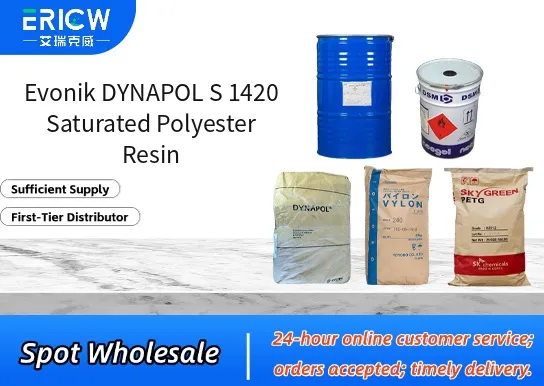
Highly weather-resistant and UV-stable for long-term outdoor performance.
Excellent gloss retention and color stability in demanding coating systems.
Low viscosity enables easy formulation and high solids content without solvents.
Good compatibility with melamine formaldehyde crosslinkers for thermoset applications.
Consistent batch-to-batch reproducibility meeting stringent industrial quality standards.
Automotive OEM clearcoats and topcoats.
Industrial maintenance coatings for architectural metal façades.
Coil coatings requiring high durability and corrosion resistance.
Powder coating base resins for exterior-appliance finishes.
High-performance can and general metal packaging coatings.
| Chemical Type | Saturated polyester resin (carboxyl-functional) |
| Product Form | Pale yellow to amber viscous liquid |
| Appearance | Clear, homogeneous, free of sediment |
| Acid Value (mg KOH/g) | 28–34 |
| Hydroxyl Value (mg KOH/g) | 5–9 |
| Viscosity (25 °C, mPa·s) | 3,000–6,000 |
| Softening Point (°C) | Not applicable (liquid at room temperature) |
| Primary Applications | Thermoset coatings for metal substrates |
Q1: What is the primary application of DYNAPOL S 1420 in coating systems?
A: DYNAPOL S 1420 is a low-viscosity, high-functionality saturated polyester resin designed primarily as a crosslinker in thermosetting powder coatings—especially for architectural and industrial applications requiring excellent gloss retention, mechanical durability, and weather resistance.
Q2: How does DYNAPOL S 1420 differ from standard TGIC-based curing systems?
A: Unlike TGIC, DYNAPOL S 1420 is a non-halogenated, glycidyl-functional polyester that enables TGIC-free powder formulations—supporting regulatory compliance trends and offering improved storage stability and reduced risk of yellowing under UV exposure.
Q3: Is DYNAPOL S 1420 compatible with common polyester resins used in decorative powder coatings?
A: Yes—it exhibits broad compatibility with standard carboxyl-functional polyesters, including both aromatic and hybrid aliphatic-aromatic types, enabling flexible formulation design for a range of cure schedules and performance targets.
Q4: What are typical handling and storage recommendations for this resin?
A: Store in original sealed containers at temperatures between 10 °C and 30 °C, away from direct sunlight and moisture. Prolonged exposure to elevated temperatures or humidity may affect reactivity and flow behavior; always follow good industrial hygiene practices during handling.
Contact With Us:
E-mail: wangxingqiang@ericwchem.com
Have a Questions? Call Us:
Add:
Building A1, Jiete Industrial Park, Huangpu District, Guangzhou City, Guangdong Province, China