English
 Español
 tiếng việt
 русский
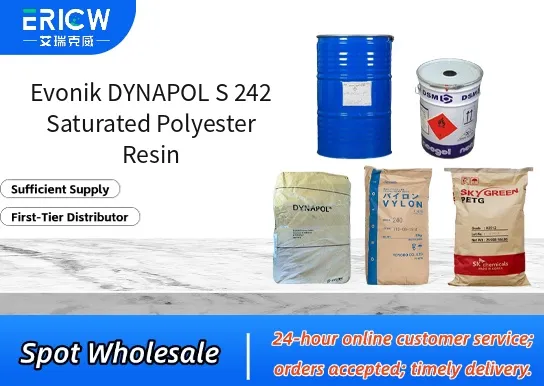
High chemical resistance to solvents, acids, and alkalis in cured coatings.
Excellent weathering and UV stability for long-term outdoor performance.
Low viscosity enables high solids formulation with good flow and leveling.
Good compatibility with melamine-formaldehyde crosslinkers for thermoset systems.
Consistent batch-to-batch reproducibility meeting stringent Evonik quality standards.
Automotive OEM and refinish topcoats requiring high gloss and durability.
Industrial maintenance coatings for metal structures and equipment.
Powder coating formulations for architectural aluminum extrusions.
General-purpose coil coating systems for pre-painted metal substrates.
| Chemical Type | Saturated polyester resin (carboxyl-functional) |
| Product Form | Clear to pale yellow liquid |
| Appearance | Homogeneous, transparent, free of sediment |
| Acid Value (mg KOH/g) | 25–35 |
| Hydroxyl Value (mg KOH/g) | 10–20 |
| Viscosity at 25 °C (mPa·s) | 2,500–4,500 |
| Specific Gravity (25 °C) | 1.12–1.16 |
| Primary Applications | Thermosetting coatings (e.g., with melamine or epoxy crosslinkers) |
Q1: What is the primary application area for DYNAPOL S 242?
A: DYNAPOL S 242 is a saturated polyester resin designed primarily for use in high-performance powder coatings, especially where excellent flow, leveling, and mechanical resistance are required—such as in architectural, appliance, and general industrial finishing applications.
Q2: Is DYNAPOL S 242 compatible with common curing agents used in powder coatings?
A: Yes, it is formulated to be compatible with standard crosslinkers such as triglycidyl isocyanurate (TGIC) and hydroxyalkyl amide (HAA) systems, enabling flexible formulation options depending on regulatory, performance, and processing requirements.
Q3: How does DYNAPOL S 242 contribute to film formation and surface appearance?
A: Its balanced molecular weight distribution and low melt viscosity support uniform melt flow and smooth film formation during curing, resulting in enhanced gloss retention, reduced orange peel, and improved substrate coverage.
Q4: What storage conditions are recommended to maintain product stability?
A: Store in a cool, dry place away from direct sunlight and sources of heat. Keep containers tightly sealed to prevent moisture absorption and avoid prolonged exposure to elevated temperatures, which may affect handling or reactivity.
Contact With Us:
E-mail: wangxingqiang@ericwchem.com
Have a Questions? Call Us:
Add:
Building A1, Jiete Industrial Park, Huangpu District, Guangzhou City, Guangdong Province, China