English
 Español
 tiếng việt
 русский
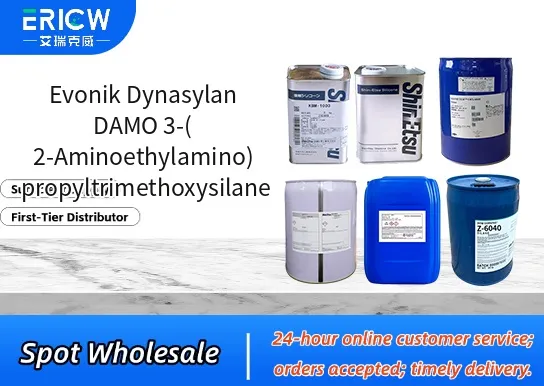
Bifunctional silane with two distinct amine groups—primary and secondary—enabling dual reactivity toward both inorganic surfaces and organic polymers.
High hydrolytic stability due to the trimethoxysilane functionality, ensuring consistent performance during storage and formulation.
Excellent coupling efficiency between silica-based fillers (e.g., glass fibers, fumed silica) and epoxy, phenolic, or polyurethane resins.
Low volatility and favorable handling characteristics compared to analogous aminopropylsilanes with ethoxy groups.
Enables enhanced interfacial adhesion, mechanical strength, and moisture resistance in composite systems.
Surface treatment of mineral fillers and reinforcements in high-performance composites for aerospace and automotive components.
Adhesion promoter in epoxy-based structural adhesives and encapsulants for electronics packaging.
Functional additive in fiber-reinforced polymer (FRP) matrices to improve fiber–matrix bonding and delamination resistance.
Modifier for silica gels and sol-gel coatings requiring enhanced crosslink density and thermal stability.
Key ingredient in specialty sealants and caulks where long-term durability under humid conditions is critical.
| Chemical Type | Aminosilane coupling agent (bifunctional) |
| Product Form | Liquid |
| Appearance | Colorless to pale yellow clear liquid |
| Molecular Weight | 248.4 g/mol |
| Density (20 °C) | 1.02–1.04 g/cm³ |
| Refractive Index (20 °C) | 1.435–1.445 |
| pH (1% aqueous solution) | 10.5–11.5 |
| Solubility | Miscible with water, alcohols, acetone, and many common organic solvents |
Contact With Us:
E-mail: wangxingqiang@ericwchem.com
Have a Questions? Call Us:
Add:
Building A1, Jiete Industrial Park, Huangpu District, Guangzhou City, Guangdong Province, China