English
 Español
 tiếng việt
 русский
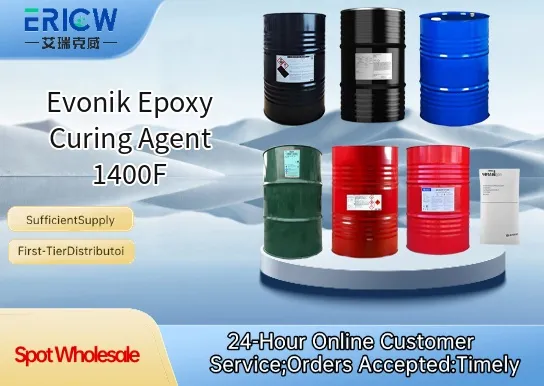
Fast-reacting aliphatic amine-based curing agent enabling short demolding cycles.
Excellent low-temperature reactivity down to 5 °C without external heat input.
Low viscosity for easy handling, precise metering, and superior filler wetting.
Low volatility and reduced amine odor versus conventional aliphatic amines.
Good chemical resistance and mechanical performance in cured epoxy systems.
Structural adhesives for automotive bonding and assembly.
Electrical encapsulation and potting compounds for power electronics.
High-performance flooring and industrial coatings requiring rapid turnaround.
Composite matrix resins for wind turbine blade manufacturing.
Repair mortars and grouts for infrastructure rehabilitation.
| Chemical Type | Aliphatic polyamine adduct |
| Product Form | Liquid |
| Appearance | Colorless to pale yellow clear liquid |
| Density (20 °C) | 0.92–0.96 g/cm³ |
| Viscosity (25 °C) | 200–400 mPa·s |
| Amine Value | 380–420 mg KOH/g |
| Reactivity Profile | Fast-curing at ambient temperature |
| Storage Stability | ≥12 months at 25 °C in sealed container |
Q1: What is the primary function of Epoxy Curing Agent 1400F in epoxy formulations?
A: Evonik Epoxy Curing Agent 1400F is a specialty amine-based hardener designed to initiate and control the crosslinking reaction of epoxy resins, enabling the formation of thermoset networks with enhanced mechanical strength, chemical resistance, and thermal stability.
Q2: Is 1400F suitable for low-VOC or high-solids coating systems?
A: Yes — 1400F is formulated to support high-performance, low-VOC applications. Its reactivity profile and compatibility with common epoxy resins allow formulators to develop high-solids, solvent-reduced, or even solvent-free coatings without compromising cure efficiency or final film properties.
Q3: How does 1400F compare to conventional aliphatic amines in terms of pot life and cure speed?
A: Compared to standard aliphatic amines, 1400F offers a more balanced reactivity — providing extended working time (pot life) at ambient temperatures while still enabling efficient post-cure or accelerated room-temperature development of properties, making it well-suited for industrial coating and adhesive applications requiring process flexibility.
Q4: Can 1400F be used in food-contact or potable water applications?
A: While 1400F is not pre-approved for direct food-contact use, it may be incorporated into systems where final cured formulations comply with relevant regulatory requirements — subject to full formulation evaluation, migration testing, and end-use validation by the responsible manufacturer.
Q5: What types of epoxy resins does 1400F typically pair with?
A: 1400F demonstrates broad compatibility with standard liquid and solid bisphenol-A and bisphenol-F epoxy resins, as well as novolac epoxies. Optimal performance is achieved when matched with resins having equivalent weights commonly used in protective coatings, composites, and electrical encapsulation.
Contact With Us:
E-mail: wangxingqiang@ericwchem.com
Have a Questions? Call Us:
Add:
Building A1, Jiete Industrial Park, Huangpu District, Guangzhou City, Guangdong Province, China