English
 Español
 tiếng việt
 русский
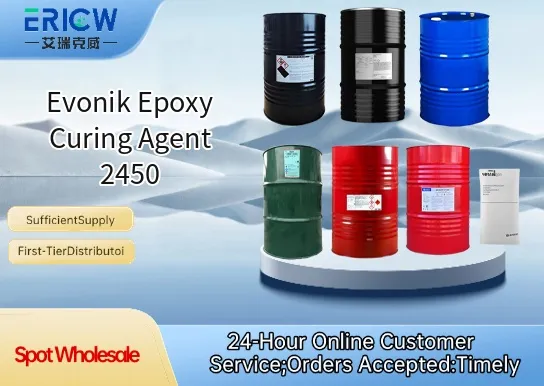
Low-viscosity liquid formulation enabling excellent processability and easy handling in standard epoxy systems.
Fast-reacting aliphatic amine-based chemistry delivering rapid cure at ambient and elevated temperatures.
Excellent chemical resistance, particularly to alkalis and solvents, after full cure.
Good flexibility and impact resistance in cured epoxy networks without compromising hardness.
Low exotherm profile supporting thick-section casting and minimizing thermal stress in sensitive substrates.
Industrial flooring systems requiring rapid return-to-service and abrasion resistance.
Electrical encapsulation and potting compounds for transformers and power electronics.
Composite matrix resins for wind turbine blade adhesives and structural bonding.
Repair mortars and grouts for concrete infrastructure rehabilitation.
High-performance tooling and mold-making resins in aerospace and automotive prototyping.
| Chemical Type | Aliphatic polyamine |
| Product Form | Liquid |
| Appearance | Pale yellow to colorless clear liquid |
| Density (20 °C) | ~0.92–0.94 g/cm³ |
| Viscosity (25 °C) | 150–250 mPa·s |
| Amine Value | 380–420 mg KOH/g |
| Reactivity Profile | Fast-curing, ambient to moderate heat activation |
| Primary Applications | Structural adhesives, coatings, composites, and castings |
Q1: What is the primary chemical class of Evonik Epoxy Curing Agent 2450?
A: Evonik Epoxy Curing Agent 2450 is a modified aliphatic amine-based curing agent, engineered for enhanced reactivity, low volatility, and improved compatibility with standard epoxy resins.
Q2: Is this curing agent suitable for ambient-cure applications?
A: Yes — it is specifically formulated to enable efficient curing at room temperature, making it well-suited for coatings, adhesives, and composite systems where thermal energy input is limited or impractical.
Q3: How does it compare to conventional amine hardeners in terms of pot life and film formation?
A: It offers extended working time (pot life) compared to highly reactive aliphatic amines, while still delivering good through-cure and surface dryness. Film formation is typically uniform with low blush tendency under moderate humidity conditions.
Q4: Can it be used in food-contact or potable water applications?
A: Evonik Epoxy Curing Agent 2450 is not pre-qualified for direct food-contact or potable water applications. Formulators must conduct full regulatory evaluation—including extractables testing and compliance verification—based on final cured system performance and applicable regional requirements.
Q5: What guidance is available for dosage optimization in epoxy formulations?
A: Dosage depends on resin type, desired cure profile, and end-use requirements. It is typically used at low concentrations relative to the epoxy resin — generally ranging from 0.1% to 2% by weight — and should be optimized via small-scale trials with thorough property assessment.
Contact With Us:
E-mail: wangxingqiang@ericwchem.com
Have a Questions? Call Us:
Add:
Building A1, Jiete Industrial Park, Huangpu District, Guangzhou City, Guangdong Province, China