English
 Español
 tiếng việt
 русский
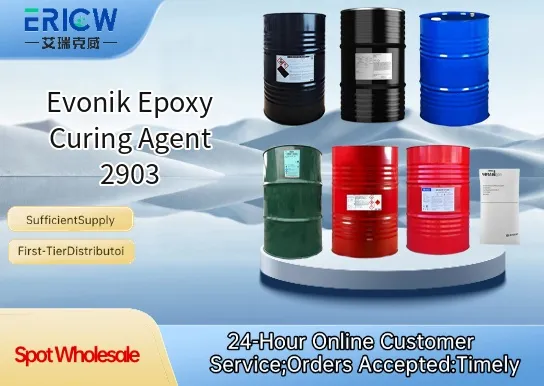
High reactivity with standard epoxy resins, enabling fast gelation and reduced cycle times.
Excellent chemical resistance in cured systems, particularly against alkalis and solvents.
Low viscosity for easy handling, metering, and homogeneous mixing without solvents.
Good adhesion to diverse substrates including metals, composites, and concrete.
Halogen-free formulation supporting sustainability and regulatory compliance (e.g., RoHS, REACH).
High-performance structural adhesives for automotive and aerospace assembly.
Electrical encapsulation and potting compounds for power electronics and EV battery modules.
Industrial flooring and protective coatings requiring rapid turnaround and chemical durability.
Composite matrix resins for wind turbine blades and lightweight transport components.
Repair mortars and grouts for infrastructure rehabilitation under time-critical conditions.
| Chemical Type | Aliphatic polyamine adduct |
| Product Form | Liquid |
| Appearance | Pale yellow to amber clear liquid |
| Primary Applications | Structural adhesives, electrical encapsulants, protective coatings, composites |
| Key Features | Fast-curing, low-viscosity, halogen-free, high-chemical-resistance |
| Benefits | Improved productivity, enhanced end-product durability, simplified processing, regulatory compliance |
| Density (20 °C) | Approx. 0.95–0.98 g/cm³ |
| Storage Stability | ≥12 months in original sealed container at ≤25 °C |
Q1: What is the primary chemical class of Epoxy Curing Agent 2903?
A: Evonik Epoxy Curing Agent 2903 is a modified aliphatic amine-based curing agent, designed to offer balanced reactivity, low volatility, and reduced skin sensitization potential compared to conventional amines.
Q2: Is this curing agent suitable for high-performance coatings requiring extended pot life and ambient-cure capability?
A: Yes — it is specifically formulated for ambient- or low-temperature cure systems where extended working time, good film formation, and robust chemical resistance are required, such as in industrial maintenance and protective coatings.
Q3: How does Epoxy Curing Agent 2903 compare to standard DETA or DEEDA in terms of handling safety?
A: It exhibits significantly lower vapor pressure and reduced dermal sensitization risk, making it safer to handle without compromising crosslink density or final coating performance — though appropriate PPE and workplace ventilation remain essential.
Q4: Can it be used in epoxy formulations intended for contact with potable water or food-processing environments?
A: While not pre-approved for direct food contact, its formulation profile supports compliance pathways for potable water applications when incorporated into fully certified coating systems — end-use validation per local regulatory requirements is mandatory.
Contact With Us:
E-mail: wangxingqiang@ericwchem.com
Have a Questions? Call Us:
Add:
Building A1, Jiete Industrial Park, Huangpu District, Guangzhou City, Guangdong Province, China