English
 Español
 tiếng việt
 русский
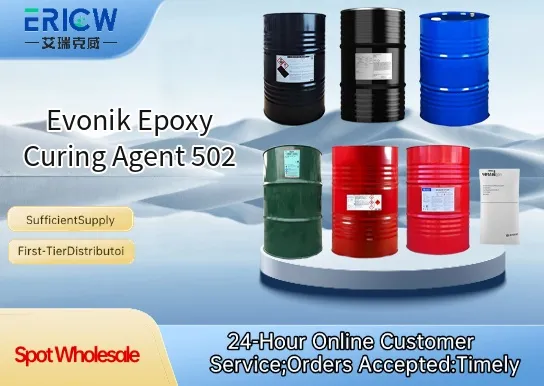
Fast-reacting aliphatic amine-based curing agent for room-temperature and elevated-temperature epoxy systems.
Enables excellent mechanical properties including high tensile strength and impact resistance in cured epoxy networks.
Low viscosity (≈350–450 mPa·s at 25 °C) ensures easy handling, precise metering, and superior wetting of fillers and reinforcements.
Low volatility and low skin sensitization potential compared to conventional DETA-type amines — supports safer industrial handling.
Provides good chemical resistance to water, salts, and mild acids after full cure.
High-performance structural adhesives for automotive and aerospace bonding.
Electrical encapsulation and potting compounds requiring rapid throughput and reliable dielectric performance.
Industrial flooring and heavy-duty coatings demanding rapid return-to-service and abrasion resistance.
Composite matrix resins for pultrusion and filament winding processes.
Repair mortars and grouts where fast strength development and low odor are critical.
| Chemical Type | Aliphatic polyamine adduct |
| Product Form | Liquid |
| Appearance | Clear to pale yellow liquid |
| Density (20 °C) | ≈0.92–0.96 g/cm³ |
| Viscosity (25 °C) | 350–450 mPa·s |
| Amine Value | 380–420 mg KOH/g |
| Reactivity Profile | Medium-fast, compatible with standard DGEBA resins |
| Primary Applications | Structural adhesives, coatings, composites, electrical encapsulation |
Q1: What is the primary chemical class of Evonik Epoxy Curing Agent 502?
A: Evonik Epoxy Curing Agent 502 is a latent, amine-based curing agent specifically designed for epoxy resin systems, offering controlled reactivity and extended pot life at ambient temperatures.
Q2: How does its latency benefit industrial processing?
A: Its latency enables stable one-component formulations with excellent shelf life, allowing for simplified handling, pre-mixing, and storage prior to thermal activation—ideal for coatings, adhesives, and encapsulation processes requiring precise timing and reproducible cure profiles.
Q3: Which epoxy resins is it typically compatible with?
A: It demonstrates broad compatibility with standard liquid and solid bisphenol-A and bisphenol-F epoxy resins, as well as novolac epoxies—performance optimization requires formulation-specific evaluation due to variations in resin functionality and molecular weight.
Q4: What is the typical dosage range during formulation?
A: Dosage depends on the target performance requirements and epoxy resin type, but it is generally used at low concentrations—typically ranging from 0.1% to 2% by weight relative to the epoxy resin—and must be optimized through small-scale trials to balance latency, cure speed, and final properties.
Q5: Is it suitable for applications requiring low-temperature cure or fast post-cure cycles?
A: While fully latent at room temperature, it activates efficiently upon heating—commonly initiating cure onset between 100 °C and 130 °C—with full crosslinking achievable within minutes under typical industrial thermal profiles, supporting high-throughput manufacturing without compromising film integrity or chemical resistance.
Contact With Us:
E-mail: wangxingqiang@ericwchem.com
Have a Questions? Call Us:
Add:
Building A1, Jiete Industrial Park, Huangpu District, Guangzhou City, Guangdong Province, China