English
 Español
 tiếng việt
 русский
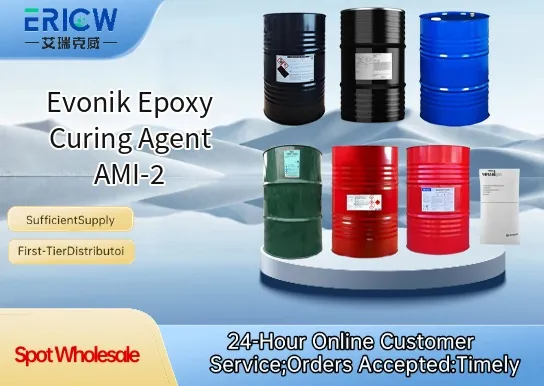
High reactivity with standard epoxy resins, enabling rapid room-temperature cure kinetics.
Excellent adhesion to metals, composites, and thermoset substrates without surface priming.
Low viscosity and favorable stoichiometric ratio for easy metering and homogeneous mixing.
Improved thermal stability in cured networks, supporting continuous service up to 120 °C.
Reduced exotherm compared to conventional amine hardeners, minimizing internal stress in thick-section castings.
Structural adhesives for automotive bonding and lightweight assembly.
Electrical encapsulants and potting compounds for power electronics.
Composite matrix resins for wind turbine blade manufacturing.
Industrial flooring and high-performance coatings requiring fast turnaround.
Tooling and mold-making materials in aerospace prototyping.
| Chemical Type | Aliphatic amine adduct |
| Product Form | Liquid |
| Appearance | Clear, pale yellow liquid |
| Primary Applications | Structural adhesives, encapsulants, composites, coatings |
| Key Features | Room-temperature cure, low exotherm, high adhesion |
| Benefits | Process efficiency, reduced energy consumption, improved part integrity |
| Storage Stability | ≥12 months at 5–25 °C in sealed original container |
| Compatibility | Standard DGEBA and novolac epoxy resins |
Q1: What is the primary chemical class of AMI-2?
A: AMI-2 is an amine-based epoxy curing agent, specifically formulated as a low-viscosity, aliphatic amine adduct designed to provide balanced reactivity and handling characteristics in ambient- and elevated-temperature cure systems.
Q2: How does AMI-2 compare to conventional DETA or TETA in terms of handling safety?
A: AMI-2 exhibits significantly reduced volatility and skin sensitization potential compared to standard aliphatic polyamines like DETA or TETA, making it safer to handle during formulation and processing without compromising final crosslink density or mechanical performance.
Q3: What types of epoxy resins is AMI-2 typically compatible with?
A: AMI-2 is broadly compatible with standard liquid and solid bisphenol-A and bisphenol-F epoxy resins, as well as many novolac and cycloaliphatic epoxies—offering good solubility and predictable gel times across a range of molecular weights and functionalities.
Q4: Is AMI-2 suitable for applications requiring FDA-compliant cured systems?
A: While AMI-2 itself is not pre-approved under FDA food-contact regulations, it may be used in formulations intended for indirect food-contact applications where full regulatory compliance is achieved through end-product testing and appropriate post-cure protocols—subject to final validation by the formulator.
Q5: What is the typical dosage range for AMI-2 in standard epoxy formulations?
A: Dosage depends on formulation requirements and target properties, but AMI-2 is generally used at low concentrations relative to resin weight—typically ranging from 0.1% to 2% by weight—enabling efficient crosslinking without excessive exotherm or brittleness.
Contact With Us:
E-mail: wangxingqiang@ericwchem.com
Have a Questions? Call Us:
Add:
Building A1, Jiete Industrial Park, Huangpu District, Guangzhou City, Guangdong Province, China