English
 Español
 tiếng việt
 русский
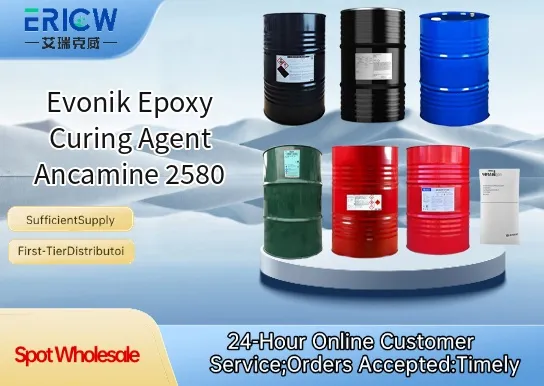
Fast-reacting aliphatic amine curing agent enabling rapid room-temperature cure of epoxy resins.
Low viscosity for excellent processability and easy incorporation into epoxy formulations.
Low volatility and reduced amine odor, supporting improved workplace safety and handling.
Delivers high glass transition temperature (Tg) and excellent mechanical properties in cured systems.
Compatible with standard bisphenol-A and bisphenol-F epoxy resins for broad formulation flexibility.
Industrial maintenance coatings requiring fast return-to-service performance.
Electrical encapsulation and potting compounds for transformers and electronic components.
High-performance adhesives in transportation and wind energy composite assembly.
Flooring systems demanding rapid hardening and chemical resistance.
Tooling and casting resins where low exotherm and dimensional stability are critical.
| Chemical Type | Aliphatic polyamine |
| Product Form | Liquid |
| Appearance | Clear, pale yellow liquid |
| Primary Applications | Epoxy coatings, adhesives, encapsulants, composites |
| Key Features | Room-temperature cure, low viscosity, low odor |
| Benefits | Short demold time, good chemical resistance, high Tg |
| Storage Stability | 12 months in original sealed container at 15–25 °C |
| Reactivity Profile | High reactivity with standard epoxy resins |
Q1: What is the primary chemical class of Ancamine 2580?
A: Ancamine 2580 is a modified aliphatic amine curing agent, designed to offer improved handling characteristics and reduced volatility compared to conventional amine hardeners.
Q2: Is Ancamine 2580 suitable for low-temperature epoxy curing applications?
A: Yes — it is formulated to provide effective reactivity at ambient to moderately low temperatures, enabling good cure development without forced heating in many industrial coating and adhesive systems.
Q3: How does Ancamine 2580 compare to standard DETA or TETA in terms of pot life and film properties?
A: It typically offers extended pot life relative to unmodified polyamines while delivering cured films with enhanced flexibility, reduced brittleness, and improved resistance to blush under humid conditions.
Q4: Can Ancamine 2580 be used in food-contact or potable water applications?
A: Ancamine 2580 is not pre-qualified for direct food-contact or potable water use; formulators must conduct full regulatory evaluation and testing according to applicable regional requirements before such deployment.
Q5: What types of epoxy resins is Ancamine 2580 most commonly paired with?
A: It is widely compatible with standard liquid and solid bisphenol-A and bisphenol-F epoxy resins, and is frequently selected for high-solids and solvent-free formulations in protective coatings and flooring systems.
Contact With Us:
E-mail: wangxingqiang@ericwchem.com
Have a Questions? Call Us:
Add:
Building A1, Jiete Industrial Park, Huangpu District, Guangzhou City, Guangdong Province, China