English
 Español
 tiếng việt
 русский
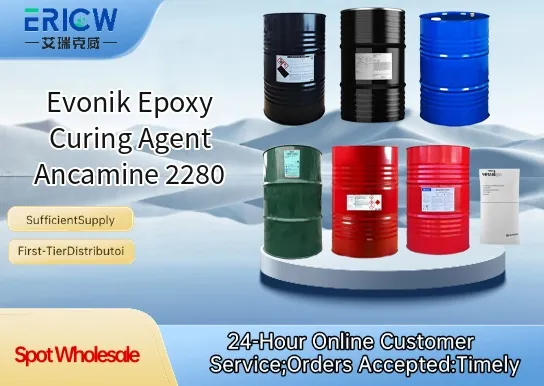
Fast-reacting aliphatic amine curing agent offering short pot life and rapid ambient-cure performance.
Excellent flexibility and impact resistance in cured epoxy systems.
Low viscosity enables easy handling, efficient mixing, and good wetting of fillers and reinforcements.
Good chemical resistance—particularly to alkalis, solvents, and mild acids—after full cure.
Low volatility and reduced amine odor compared to conventional aliphatic amines, supporting safer handling.
High-performance industrial flooring and concrete coatings.
Structural adhesives for metal, composites, and automotive assembly.
Electrical encapsulants and potting compounds requiring fast turnaround.
Repair mortars and grouts for civil engineering and infrastructure maintenance.
Tooling and prototype casting resins demanding dimensional stability and toughness.
| Chemical Type | Aliphatic polyamine |
| Product Form | Liquid |
| Appearance | Pale yellow to amber clear liquid |
| Primary Applications | Ambient-cure epoxy coatings, adhesives, and castings |
| Key Features | Fast ambient cure, low viscosity, flexible cured film |
| Benefits | Reduced processing time, improved operator safety, enhanced toughness |
| Storage Stability | At least 12 months in original sealed container at 20 °C |
| Recommended Epoxy Equivalent Ratio (AHEW) | ~85–95 g/eq (based on DGEBA resins) |
Q1: What is the primary chemical class and functional mechanism of Ancamine 2280?
A: Ancamine 2280 is a polyetheramine-based curing agent, featuring primary and secondary amine groups that react with epoxy resins via nucleophilic addition. Its flexible polyether backbone contributes to low viscosity, reduced exotherm, and enhanced toughness in cured systems.
Q2: How does Ancamine 2280 compare to traditional aliphatic amines in terms of handling and safety?
A: Compared to many conventional aliphatic amines, Ancamine 2280 exhibits significantly lower volatility and reduced skin and respiratory irritation potential due to its higher molecular weight and hydrophilic structure. It is not classified as a skin sensitizer under standard GHS criteria, though appropriate personal protective equipment remains recommended during handling.
Q3: Is Ancamine 2280 suitable for high-performance coatings requiring extended pot life and ambient-cure capability?
A: Yes — its moderate reactivity enables extended working time at ambient temperatures while still delivering full cure without forced heating. This makes it well-suited for industrial maintenance coatings, marine topcoats, and flooring systems where application flexibility and film integrity are critical.
Q4: Can Ancamine 2280 be used in formulations intended for contact with potable water or food-processing environments?
A: Ancamine 2280 is not pre-approved for direct food contact or potable water applications. Formulators must conduct full regulatory evaluation—including extractables testing and compliance verification with applicable national or regional frameworks—before use in such sensitive end uses.
Contact With Us:
E-mail: wangxingqiang@ericwchem.com
Have a Questions? Call Us:
Add:
Building A1, Jiete Industrial Park, Huangpu District, Guangzhou City, Guangdong Province, China