English
 Español
 tiếng việt
 русский
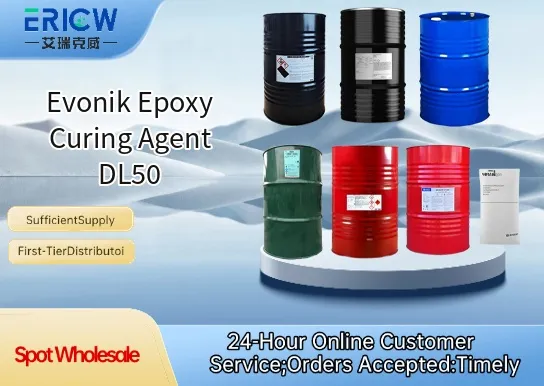
Low-viscosity liquid enabling excellent processability and easy handling in standard epoxy formulation equipment.
Aliphatic amine-based chemistry providing fast ambient-cure kinetics without requiring elevated temperature post-cure.
Outstanding chemical resistance, particularly to solvents, alkalis, and neutral aqueous media.
Low volatility and low skin sensitization potential compared to conventional aromatic amines.
Good compatibility with bisphenol-A and bisphenol-F epoxy resins across a broad stoichiometric range.
Industrial flooring systems requiring rapid return-to-service and high durability.
Concrete repair mortars and structural strengthening adhesives.
Electrical potting and encapsulation compounds for medium-voltage components.
Marine coatings and protective linings for tanks and offshore infrastructure.
Adhesives for metal-to-metal and composite bonding in transportation manufacturing.
| Chemical Type | Aliphatic polyamine adduct |
| Product Form | Liquid |
| Appearance | Pale yellow to colorless clear liquid |
| Density (20 °C) | Approx. 0.92–0.94 g/cm³ |
| Viscosity (25 °C) | 150–250 mPa·s |
| Amine Value | 380–420 mg KOH/g |
| Reactivity Profile | Ambient-curing, exotherm peak ~60–75 °C (100 g batch) |
| Storage Stability | ≥12 months at 20 °C in sealed original container |
Q1: What is the primary function of DL50 in epoxy systems?
A: DL50 is a latent amine-based curing agent designed to provide controlled reactivity and extended pot life at ambient temperatures, while enabling rapid and complete cure upon thermal activation—making it especially suitable for one-component (1K) epoxy formulations requiring storage stability and on-demand curing.
Q2: Which types of epoxy resins is DL50 typically compatible with?
A: DL50 demonstrates broad compatibility with standard liquid and solid bisphenol-A and bisphenol-F based epoxy resins, as well as many novolac and cycloaliphatic epoxies. Optimal performance is achieved when matched with resins having average molecular weights between 300 and 4000 g/mol; formulation screening is recommended for specialty or highly functionalized epoxies.
Q3: How does DL50 influence the thermal and mechanical properties of cured epoxy?
A: When fully cured, DL50 contributes to high glass transition temperatures (Tg), good chemical resistance, and enhanced toughness compared to conventional aliphatic amines—without sacrificing the dimensional stability required for precision engineering applications such as electronics encapsulation and structural adhesives.
Q4: Is DL50 suitable for applications requiring low volatility and minimal odor?
A: Yes—DL50 is a non-volatile, low-odor solid with negligible vapor pressure under ambient conditions, supporting safer handling and improved workplace air quality in industrial manufacturing environments where operator exposure and VOC management are key considerations.
Q5: What are typical processing conditions for achieving full cure with DL50?
A: Full crosslinking generally requires thermal activation—commonly achieved with post-cure profiles such as 120–150 °C for 30–90 minutes. The exact time/temperature profile depends on part geometry, thermal mass, and desired property development; lower-temperature cures are possible but may require longer dwell times to reach optimal performance.
Contact With Us:
E-mail: wangxingqiang@ericwchem.com
Have a Questions? Call Us:
Add:
Building A1, Jiete Industrial Park, Huangpu District, Guangzhou City, Guangdong Province, China