English
 Español
 tiếng việt
 русский
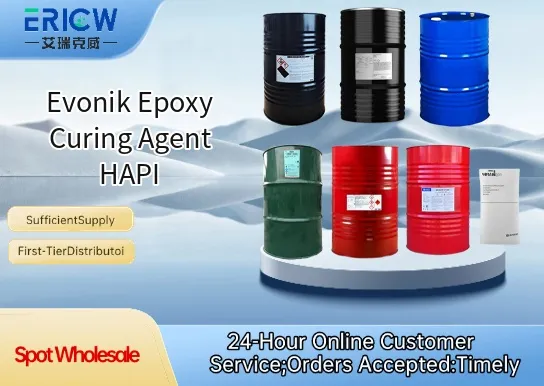
High reactivity with standard epoxy resins, enabling fast gelation and reduced cycle times.
Excellent chemical resistance in cured systems, particularly against alkalis and solvents.
Low viscosity at room temperature for easy handling, metering, and homogeneous mixing.
Halogen-free formulation supporting sustainability goals and compliance with RoHS and REACH.
Good adhesion to diverse substrates including metals, composites, and concrete.
High-performance structural adhesives for automotive and aerospace assembly.
Electrical encapsulation and potting compounds for power electronics and EV battery modules.
Protective coatings for industrial flooring and corrosion-resistant linings.
Composite matrix resins in wind turbine blade manufacturing and pultrusion processes.
Repair mortars and grouts requiring rapid strength development under ambient conditions.
| Chemical Type | Amine-based aliphatic curing agent (polyetheramine-modified) |
| Product Form | Liquid |
| Appearance | Pale yellow to amber clear liquid |
| Density (20 °C) | ~1.02–1.05 g/cm³ |
| Viscosity (25 °C) | 200–400 mPa·s |
| Amine Value | 220–250 mg KOH/g |
| Primary Applications | Structural adhesives, electrical encapsulation, protective coatings, composites |
| Key Features | Fast-curing, halogen-free, low-viscosity, chemically resistant |
Q1: What is the primary function of HAPI in epoxy systems?
A: HAPI is a highly reactive amine-based curing agent designed to accelerate epoxy resin crosslinking, enabling rapid development of mechanical strength and thermal resistance—particularly valuable in high-throughput industrial coating and adhesive applications.
Q2: How does HAPI compare to conventional aliphatic amines in terms of pot life and cure speed?
A: HAPI offers a balanced reactivity profile: significantly faster than standard aliphatic amines at ambient temperature, yet provides sufficient working time for practical mixing and application—especially when used with medium- to high-functionality epoxy resins.
Q3: Is HAPI suitable for low-VOC or solvent-free formulations?
A: Yes—HAPI is a liquid, low-viscosity curing agent with negligible volatility and no added solvents, making it well-suited for formulating low-VOC, high-solids, and 100% solids epoxy systems without compromising reactivity or film performance.
Q4: What types of epoxy resins is HAPI typically compatible with?
A: HAPI demonstrates broad compatibility with diglycidyl ether of bisphenol A (DGEBA) and bisphenol F (DGEBF) resins, as well as novolac and cycloaliphatic epoxies—enabling tailored performance across coatings, composites, and electrical encapsulation applications.
Q5: How should HAPI be stored to maintain optimal performance?
A: Store in tightly sealed original containers under dry, cool conditions (below 30 °C), protected from moisture and direct sunlight. Prolonged exposure to humidity or elevated temperatures may lead to viscosity increase or reduced reactivity over time.
Contact With Us:
E-mail: wangxingqiang@ericwchem.com
Have a Questions? Call Us:
Add:
Building A1, Jiete Industrial Park, Huangpu District, Guangzhou City, Guangdong Province, China