English
 Español
 tiếng việt
 русский
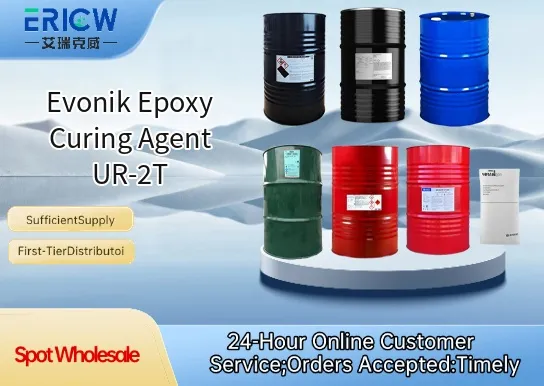
Fast-reacting aliphatic amine-based curing agent enabling short demolding cycles in thermoset processing.
Excellent compatibility with standard liquid and solid epoxy resins, including DGEBA and novolac types.
Delivers high glass transition temperature (Tg) and superior mechanical strength in cured networks.
Low viscosity and favorable pot life at ambient temperatures support ease of handling and meter-mix dispensing.
Compliant with REACH and meets Evonik’s stringent quality and sustainability standards for industrial use.
Structural adhesives for automotive and aerospace assembly.
Electrical encapsulation and potting compounds for power electronics and EV battery modules.
High-performance composites in wind turbine blade bonding and repair systems.
Precision casting and tooling materials for industrial molds and jigs.
Coating systems requiring rapid cure and chemical resistance in industrial maintenance applications.
| Chemical Type | Aliphatic polyamine adduct |
| Product Form | Liquid |
| Appearance | Clear, pale yellow to amber liquid |
| Primary Applications | Structural adhesives, composites, electrical encapsulation, tooling |
| Key Features | Fast cure, low exotherm, high Tg, good flexibility |
| Benefits | Improved productivity, enhanced durability, reliable bond performance |
| Storage Stability | ≥12 months at 5–25 °C in sealed original container |
| Handling Recommendation | Use in well-ventilated areas; refer to Safety Data Sheet (SDS) for PPE guidance |
Q1: What is the primary function of UR-2T in epoxy systems?
A: UR-2T is a latent, low-odor amine-based curing agent designed to enable controlled reactivity in epoxy resins—supporting extended pot life at ambient temperatures while delivering efficient crosslinking upon thermal activation.
Q2: Is UR-2T suitable for applications requiring low volatility and reduced odor during processing?
A: Yes—UR-2T is formulated to minimize volatile organic emissions and offers significantly lower odor compared to conventional aliphatic amines, making it well-suited for indoor or enclosed manufacturing environments where worker comfort and air quality are priorities.
Q3: How does UR-2T influence the thermal cure profile of epoxy formulations?
A: UR-2T exhibits latent behavior with onset of significant reactivity typically beginning above 100 °C, enabling processing flexibility—such as pre-impregnation or coating application at room temperature—followed by rapid, uniform network formation during subsequent thermal post-cure.
Q4: Can UR-2T be used in combination with other curing agents or accelerators?
A: Yes—UR-2T is compatible with various co-curing agents and thermal accelerators commonly used in epoxy technology; however, any synergistic blend should be validated through formulation testing to ensure desired latency, cure kinetics, and final performance properties.
Q5: What types of epoxy resins is UR-2T most commonly paired with?
A: UR-2T demonstrates broad compatibility with standard liquid and solid bisphenol-A and bisphenol-F based epoxy resins, as well as many novolac and cycloaliphatic epoxies—particularly where balanced processability and high glass transition temperature (Tg) are required.
Contact With Us:
E-mail: wangxingqiang@ericwchem.com
Have a Questions? Call Us:
Add:
Building A1, Jiete Industrial Park, Huangpu District, Guangzhou City, Guangdong Province, China