English
 Español
 tiếng việt
 русский
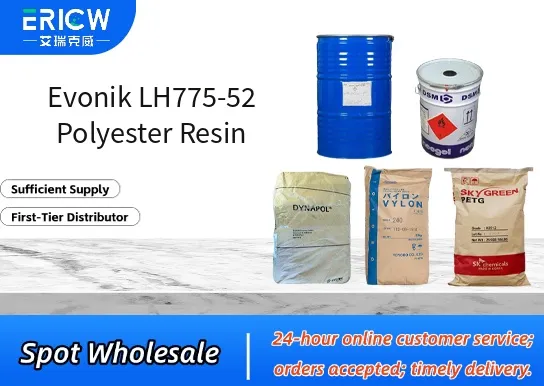
High reactivity with standard peroxide initiators for rapid gelation and efficient production cycles.
Excellent mechanical strength and dimensional stability in cured composites.
Good compatibility with common fillers, fibers, and pigment systems used in reinforced plastics.
Low viscosity at processing temperature enabling easy impregnation of glass fiber mats.
Consistent batch-to-batch performance supported by Evonik’s stringent quality control protocols.
Fiberglass-reinforced panels for transportation interiors and structural components.
Industrial tanks and chemical-resistant linings requiring corrosion resistance.
Marine deck and hull parts manufactured via hand lay-up or spray-up processes.
Architectural cladding and façade elements exposed to outdoor weathering.
Electrical enclosures and insulating housings demanding flame-retardant formulations (when compounded).
| Chemical Type | Unsaturated polyester resin |
| Product Form | Liquid, ready-to-use |
| Appearance | Clear to slightly yellow viscous liquid |
| Viscosity (25°C) | 450–650 mPa·s |
| Acid Value | 18–22 mg KOH/g |
| Solid Content | ~100% (non-volatile) |
| Density (25°C) | 1.11–1.13 g/cm³ |
| Styrene Content | 38–42 wt% |
Q1: What is the primary function of LH775-52 in unsaturated polyester resin systems?
A: LH775-52 functions as a reactive diluent and viscosity modifier, enhancing processability during casting, pultrusion, or laminating while participating in the crosslinking network to support final mechanical performance.
Q2: Is LH775-52 compatible with common peroxide initiators used in polyester curing?
A: Yes — LH775-52 is formulated for compatibility with standard free-radical initiators such as MEKP and BPO, and does not significantly interfere with typical cure profiles under recommended processing conditions.
Q3: How does LH775-52 compare to styrene in terms of volatility and handling safety?
A: LH775-52 exhibits lower volatility and reduced odor compared to styrene, contributing to improved workplace air quality and lower VOC emissions during processing — though standard industrial hygiene practices remain essential.
Q4: Can LH775-52 be used in gel coat formulations?
A: Yes — it is suitable for use in gel coats where reduced styrene content and improved surface aesthetics are desired, provided formulation adjustments account for its reactivity and compatibility with pigments and thixotropic agents.
Contact With Us:
E-mail: wangxingqiang@ericwchem.com
Have a Questions? Call Us:
Add:
Building A1, Jiete Industrial Park, Huangpu District, Guangzhou City, Guangdong Province, China