English
 Español
 tiếng việt
 русский
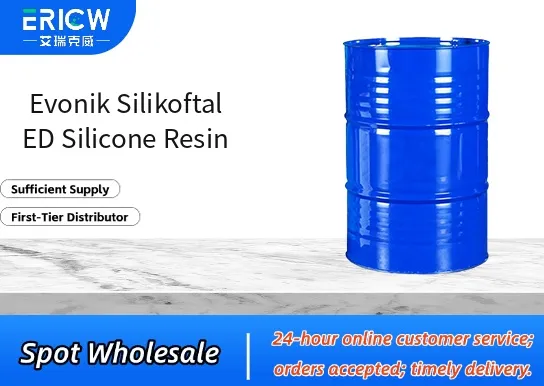
High thermal stability up to 250 °C continuous service temperature.
Excellent weather resistance and UV stability for long-term outdoor performance.
Good compatibility with organic resins including acrylics, alkyds, and polyesters.
Enhanced hardness and scratch resistance in cured coatings.
Low volatile organic compound (VOC) content, supporting sustainable coating formulations.
High-performance industrial maintenance coatings for steel structures.
Heat-resistant coatings for exhaust systems and engine components.
Durable topcoats for architectural metal cladding and roofing substrates.
Hybrid silicone-organic coatings requiring balanced flexibility and chemical resistance.
Protective coatings for power generation and petrochemical infrastructure.
| Chemical Type | Ethyl silicate-modified silicone resin |
| Product Form | Liquid, solvent-based |
| Appearance | Clear to slightly yellowish liquid |
| Solvent | Xylene / aromatic hydrocarbon blend |
| Non-Volatile Content | 50–55 wt.% |
| Viscosity (25 °C) | 80–120 mPa·s (Brookfield, spindle #2, 60 rpm) |
| Density (20 °C) | 0.92–0.96 g/cm³ |
| Primary Applications | Heat-resistant hybrid coatings, protective topcoats, corrosion protection |
Q1: What is the primary function of Silikoftal ED in coating systems?
A: Silikoftal ED is a reactive silicone resin designed to enhance surface properties—particularly slip, mar resistance, and substrate wetting—in thermosetting organic coatings such as polyester, acrylic, and alkyd systems. It co-reacts during cure, providing durable, non-migrating performance without compromising film integrity.
Q2: Is Silikoftal ED compatible with waterborne formulations?
A: Yes, Silikoftal ED can be incorporated into waterborne systems, though it typically requires pre-dilution in a suitable organic solvent or dispersant aid to ensure stable integration. Compatibility should be verified experimentally under specific formulation pH, shear, and drying conditions.
Q3: How does Silikoftal ED differ from conventional silicone oil additives?
A: Unlike non-reactive silicone oils, Silikoftal ED contains hydrolyzable alkoxy groups and reactive silanol functionality, enabling covalent incorporation into the polymer network during curing. This results in permanent surface modification with reduced risk of blooming, hazing, or intercoat adhesion issues.
Q4: What are recommended storage conditions for Silikoftal ED?
A: Store in tightly sealed original containers at temperatures between 5 °C and 30 °C, away from moisture, strong acids, and alkaline substances. Prolonged exposure to humidity or elevated temperatures may accelerate condensation and affect viscosity stability.
Contact With Us:
E-mail: wangxingqiang@ericwchem.com
Have a Questions? Call Us:
Add:
Building A1, Jiete Industrial Park, Huangpu District, Guangzhou City, Guangdong Province, China