English
 Español
 tiếng việt
 русский
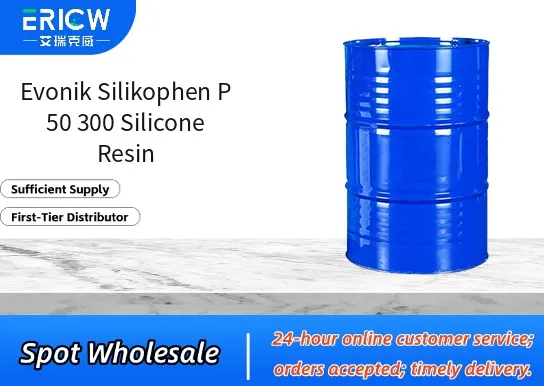
High thermal stability up to 300 °C in air for extended service life under elevated temperatures.
Excellent electrical insulation properties with low dielectric loss across wide frequency and temperature ranges.
Good compatibility with organic resins (e.g., epoxy, polyester) enabling hybrid formulation development.
Low volatility and minimal outgassing, suitable for vacuum and aerospace-critical applications.
Hydrophobic surface character providing inherent moisture resistance and improved weatherability.
High-temperature insulating varnishes for electric motor windings and transformers.
Matrix resin in thermally stable composites for aerospace structural components.
Binders in high-performance ceramic coatings and refractory paints.
Additive in flame-retardant cable jacketing compounds to enhance char integrity.
Base resin for LED encapsulation materials requiring long-term UV and thermal stability.
| Chemical Type | Phenyl-methyl silicone resin |
| Product Form | Viscous liquid |
| Appearance | Pale yellow to colorless, clear liquid |
| Primary Applications | High-temperature insulation, protective coatings, composite matrices |
| Key Features | Thermal stability, electrical insulation, hydrophobicity, resin compatibility |
| Benefits | Extended component lifetime, reduced maintenance, improved safety in demanding environments |
| Solvent Content | Non-solvent-based (100% reactive solids) |
| Storage Stability | ≥12 months at 25 °C in sealed original packaging |
Q1: What is the primary function of Silikophen P 50 300 in coating formulations?
A: Silikophen P 50 300 is a solvent-borne methyl-phenyl silicone resin designed to enhance thermal stability, weather resistance, and surface hardness in high-performance organic coatings—particularly for industrial and architectural applications requiring long-term durability under elevated temperatures or UV exposure.
Q2: Is Silikophen P 50 300 compatible with common organic resins such as acrylics, alkyds, or polyesters?
A: Yes, it exhibits good compatibility with a broad range of thermosetting and thermoplastic organic binders. It is frequently blended into acrylic-melamine, polyester-triglycidyl isocyanurate (TGIC), and alkyd-based systems to improve crosslink density and heat resistance without significant phase separation.
Q3: How should Silikophen P 50 300 be incorporated into a formulation?
A: It is typically added during the let-down stage under moderate agitation. Pre-dilution with compatible solvents (e.g., xylene, aromatic naphtha, or ketones) is recommended to ensure uniform dispersion. Avoid high-shear mixing that may induce premature condensation or viscosity instability.
Q4: Does this resin require post-curing or special thermal treatment to achieve full performance?
A: While Silikophen P 50 300 contributes to ambient-cure film formation when blended with reactive organic resins, optimal thermal stability and hydrophobicity are realized after forced drying at elevated temperatures—typically above 150 °C for industrial bake cycles.
Contact With Us:
E-mail: wangxingqiang@ericwchem.com
Have a Questions? Call Us:
Add:
Building A1, Jiete Industrial Park, Huangpu District, Guangzhou City, Guangdong Province, China