English
 Español
 tiếng việt
 русский
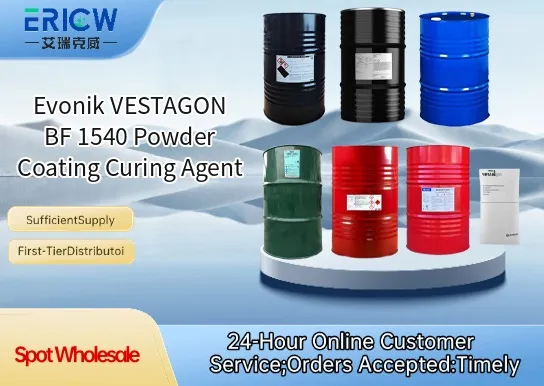
High reactivity with epoxy resins enabling fast cure at low temperatures (160–180 °C).
Excellent storage stability as a free-flowing, non-dusting powder.
Low volatility and negligible odor—supports safe handling and compliance with industrial hygiene standards.
Enables high-gloss, smooth, and defect-free coating surfaces with superior mechanical properties.
Compatible with standard epoxy-based thermosetting powder formulations without requiring process modification.
Architectural metal cladding and façade systems.
Appliance housings for refrigerators, ovens, and washing machines.
Automotive under-hood components and chassis parts.
Office furniture frames and shelving systems.
Industrial machinery enclosures and agricultural equipment.
| Chemical Type | Modified dicyandiamide (DICY) derivative |
| Product Form | Fine, free-flowing white to off-white powder |
| Appearance | Homogeneous crystalline powder |
| Primary Applications | Epoxy-based thermosetting powder coatings |
| Key Features | Low-temperature curing, high reactivity, excellent flow and leveling |
| Benefits | Energy savings, reduced VOC emissions, enhanced production throughput |
| Storage Stability | ≥6 months at ≤25 °C in original sealed packaging |
| Recommended Cure Schedule | 180 °C / 10–15 min or 200 °C / 5–8 min |
Q1: What is the primary function of VESTAGON BF 1540 in powder coating formulations?
A: VESTAGON BF 1540 is a blocked aliphatic diisocyanate-based curing agent designed to enable low-temperature curing of hydroxyl-functional polyester and acrylic resins in thermosetting powder coatings. It provides excellent storage stability in the uncured blend while enabling efficient crosslinking upon thermal activation.
Q2: What is the typical recommended cure schedule when using BF 1540?
A: BF 1540 is formulated for low-temperature curing applications, typically activated in the range of 130–150 °C. The exact time/temperature profile depends on substrate type, film thickness, and overall formulation balance, but common industrial schedules fall between 15–30 minutes at these temperatures.
Q3: How does BF 1540 compare to traditional aromatic curing agents in terms of yellowing resistance?
A: As an aliphatic blocked isocyanate, BF 1540 delivers significantly improved UV and thermal stability compared to aromatic alternatives, resulting in superior long-term color retention and reduced yellowing—especially critical for white, pastel, and clear topcoats exposed to outdoor or high-heat conditions.
Q4: Is BF 1540 compatible with standard polyester resins used in architectural and appliance coatings?
A: Yes, BF 1540 is broadly compatible with conventional hydroxyl-functional saturated polyesters, including those commonly employed in architectural cladding, household appliances, and office furniture coatings. Compatibility and reactivity should be verified during formulation development due to variations in resin hydroxyl value and molecular architecture.
Q5: What handling precautions should be observed during processing?
A: While BF 1540 is supplied in a stable, non-volatile solid form, standard occupational hygiene practices for handling fine organic powders apply—including use of appropriate ventilation, dust control measures, and personal protective equipment (e.g., respirators rated for organic particulates) to minimize inhalation exposure during mixing and charging operations.
Contact With Us:
E-mail: wangxingqiang@ericwchem.com
Have a Questions? Call Us:
Add:
Building A1, Jiete Industrial Park, Huangpu District, Guangzhou City, Guangdong Province, China