English
 Español
 tiếng việt
 русский
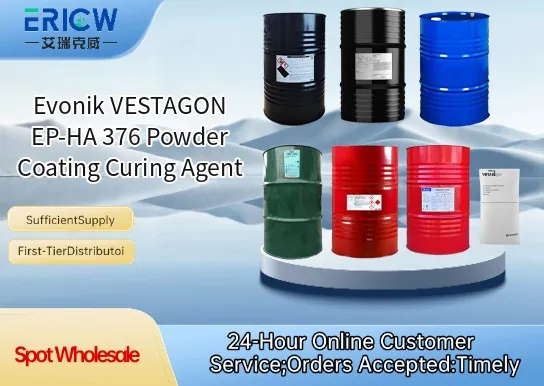
High reactivity with epoxy resins enabling fast cure at low temperatures (140–160 °C).
Excellent storage stability as a free-flowing, non-hygroscopic powder.
Low odor and low volatility, supporting improved workplace safety and compliance with VOC regulations.
Enables high-gloss, smooth, and defect-free coating films with superior mechanical resistance.
Compatible with standard epoxy-based thermoset powder formulations without requiring catalysts.
Automotive components including brake calipers, suspension parts, and under-hood metal housings.
Appliance exteriors such as washing machines, ovens, and refrigerators.
Architectural metal profiles and façade elements requiring durable, weather-resistant finishes.
Industrial equipment enclosures, racks, and shelving systems exposed to mechanical wear.
Outdoor furniture and fitness equipment requiring corrosion protection and aesthetic consistency.
| Chemical Type | Amine-functional aromatic hardener |
| Product Form | Free-flowing crystalline powder |
| Appearance | Off-white to light beige granular powder |
| Primary Applications | Epoxy-based thermoset powder coatings |
| Key Features | Low-cure, high-reactivity, low-VOC, non-yellowing |
| Benefits | Energy-efficient curing, excellent film integrity, long pot life in formulated powders |
| Storage Conditions | Store in original sealed packaging at <25 °C, dry conditions |
| Shelf Life | 24 months from date of manufacture when stored properly |
Q1: What is the primary function of VESTAGON EP-HA 376 in powder coating formulations?
A: VESTAGON EP-HA 376 is a highly reactive, low-bloom amine-based curing agent designed to crosslink epoxy resins in thermosetting powder coatings. It enables rapid cure at moderate temperatures while supporting excellent flow, gloss retention, and mechanical performance in the final film.
Q2: Is VESTAGON EP-HA 376 suitable for hybrid (epoxy-polyester) powder coatings?
A: Yes — it is widely used in hybrid systems where balanced chemical resistance, flexibility, and exterior durability are required. Its reactivity profile allows good compatibility with both epoxy and polyester components, contributing to consistent cure response and reduced risk of blooming or surface defects.
Q3: How does VESTAGON EP-HA 376 compare to conventional DICY-based curing agents in terms of processing stability?
A: Unlike dicyandiamide (DICY), VESTAGON EP-HA 376 offers improved storage stability in formulated powders due to its tailored particle morphology and lower inherent volatility. It also exhibits reduced sensitivity to humidity during handling, supporting longer shelf life and more consistent extrusion behavior.
Q4: What is the typical dosage range of VESTAGON EP-HA 376 in standard epoxy-based powder coatings?
A: Dosage depends on resin functionality and target cure schedule, but it is typically used at low concentrations — generally ranging from 0.1% to 2% by weight relative to the total formulation. Optimization is recommended via small-scale trials to balance reactivity, film appearance, and mechanical properties.
Q5: Does VESTAGON EP-HA 376 require special safety or handling precautions during powder manufacturing?
A: As with all reactive amine additives, appropriate industrial hygiene measures should be observed — including dust control, adequate ventilation, and use of personal protective equipment (e.g., respirators, gloves) during handling. It is not classified as acutely toxic, but prolonged skin contact or inhalation of airborne dust should be avoided.
Contact With Us:
E-mail: wangxingqiang@ericwchem.com
Have a Questions? Call Us:
Add:
Building A1, Jiete Industrial Park, Huangpu District, Guangzhou City, Guangdong Province, China