English
 Español
 tiếng việt
 русский
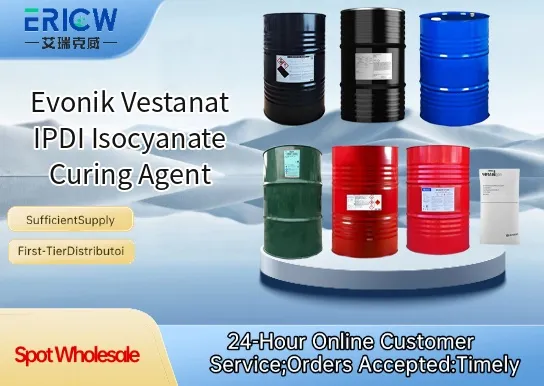
Aliphatic isocyanate based on isophorone diisocyanate (IPDI), offering excellent UV stability and color retention.
Low volatility and high functionality ensure improved pot life and controlled reactivity in two-component polyurethane systems.
Superior chemical resistance, especially to solvents, acids, and alkalis, enhancing coating durability in aggressive environments.
Enables formulation of high-performance, glossy, and scratch-resistant topcoats for demanding industrial applications.
Compatible with a broad range of polyols—including polyester, acrylic, and polyether—supporting flexible resin design.
High-end automotive clearcoats and basecoats requiring long-term gloss and weather resistance.
Industrial maintenance coatings for machinery, steel structures, and offshore equipment.
Wind turbine blade coatings exposed to extreme UV, moisture, and mechanical stress.
Precision optical and electronic encapsulation systems where clarity and adhesion are critical.
Aerospace interior coatings meeting stringent VOC, fire, smoke, and toxicity (FST) requirements.
| Chemical Type | Aliphatic diisocyanate (IPDI-based trimer) |
| Product Form | Liquid |
| Appearance | Clear, pale yellow to light amber liquid |
| NCO Content (wt %) | 15.5 – 16.5 |
| Viscosity at 25 °C (mPa·s) | 1,200 – 2,500 |
| Specific Gravity (20/20 °C) | 1.18 – 1.22 |
| Flash Point (PMCC, °C) | 145 – 160 |
| Storage Stability (unopened, 25 °C) | ≥ 12 months |
Q1: What distinguishes Vestanat IPDI from other aliphatic isocyanates like HDI or H12MDI?
A: Vestanat IPDI offers a unique combination of steric hindrance and reactivity due to its bicyclic structure, resulting in slower gel times and improved pot life compared to HDI-based systems—while still delivering excellent UV stability, hardness development, and chemical resistance typical of aliphatic isocyanates.
Q2: Is Vestanat IPDI suitable for high-solids or solvent-free coating formulations?
A: Yes—its relatively low viscosity and favorable reactivity profile make it well-suited for high-solids, low-VOC, and even 100% solids polyurethane coatings, especially where extended working time and controlled cure kinetics are required.
Q3: How does moisture sensitivity affect handling and storage of Vestanat IPDI?
A: As with all isocyanates, Vestanat IPDI reacts with ambient moisture; therefore, it must be stored under dry nitrogen and handled using moisture-controlled equipment. Prolonged exposure to humid air may lead to surface haze or viscosity increase due to urea formation.
Q4: Can Vestanat IPDI be used in two-component polyurethane adhesives for flexible substrates?
A: Yes—it is commonly employed in 2K PU adhesives requiring balanced flexibility, peel strength, and long-term durability on elastomers, plastics, or coated textiles, benefiting from its moderate crosslink density and reduced brittleness versus more rigid isocyanates.
Contact With Us:
E-mail: wangxingqiang@ericwchem.com
Have a Questions? Call Us:
Add:
Building A1, Jiete Industrial Park, Huangpu District, Guangzhou City, Guangdong Province, China