English
 Español
 tiếng việt
 русский
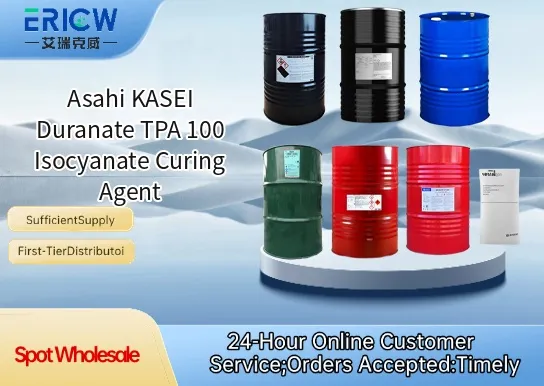
Aliphatic polyisocyanate based on hexamethylene diisocyanate (HDI) trimer, offering excellent UV stability and color retention.
Low-viscosity liquid formulation enabling easy handling, precise metering, and efficient mixing with polyol components.
Non-yellowing performance ideal for high-gloss, weather-resistant coatings requiring long-term clarity and aesthetic integrity.
Compatible with a broad range of hydroxyl-functional resins including acrylics, polyesters, and polycarbonates.
Meets stringent VOC regulations with low monomer content (<0.5% HDI), supporting sustainable coating formulations.
Automotive clearcoats and basecoat/clearcoat systems for OEM and refinish applications.
High-performance industrial maintenance coatings for machinery, rail, and agricultural equipment.
Premium architectural coatings requiring durability, gloss retention, and resistance to environmental exposure.
Plastic coatings for exterior automotive parts, electronics housings, and consumer goods.
UV-resistant wood and furniture finishes demanding clarity and long-term weatherability.
| Chemical Type | Aliphatic HDI-based trimer isocyanate |
| Product Form | Clear, colorless to pale yellow liquid |
| Appearance | Homogeneous liquid, free from sediment or haze |
| NCO Content (wt%) | 13.8–14.2% |
| Viscosity at 25°C (mPa·s) | 800–1,200 |
| Density at 25°C (g/cm³) | 1.16–1.19 |
| Monomeric HDI Content | <0.5 wt% |
| Primary Applications | Two-component polyurethane coatings |
Q1: What is the primary chemical composition of Duranate TPA 100?
A: Duranate TPA 100 is a trifunctional aliphatic isocyanate based on hexamethylene diisocyanate (HDI), modified with a trimerization structure to provide enhanced stability and reduced volatility compared to monomeric HDI.
Q2: How does Duranate TPA 100 differ from other HDI-based trimers in terms of reactivity and handling?
A: Duranate TPA 100 offers balanced reactivity—moderately slower than highly reactive aromatic isocyanates but faster than some sterically hindered aliphatic variants—making it well-suited for ambient- or low-bake coating systems where pot life and film formation must be carefully balanced.
Q3: Is Duranate TPA 100 compatible with common hydroxyl-functional resins used in high-performance coatings?
A: Yes, it exhibits excellent compatibility with a broad range of hydroxyl-terminated acrylics, polyesters, and alkyds, enabling formulation of durable, weather-resistant topcoats for automotive refinish, industrial maintenance, and specialty plastic coatings.
Q4: What are the recommended storage and handling precautions for this curing agent?
A: Store in tightly sealed containers under dry, inert atmosphere (e.g., nitrogen blanket) at temperatures between 10–30°C. Avoid exposure to moisture, strong bases, or excessive heat, as these may cause premature reaction, viscosity increase, or gelation.
Q5: Can Duranate TPA 100 be used in low-VOC or solvent-free coating systems?
A: Yes—it is commonly employed in high-solids, waterborne, and UV-curable hybrid systems due to its low vapor pressure and ability to deliver good crosslink density without requiring high NCO content or aggressive solvents.
Contact With Us:
E-mail: wangxingqiang@ericwchem.com
Have a Questions? Call Us:
Add:
Building A1, Jiete Industrial Park, Huangpu District, Guangzhou City, Guangdong Province, China