English
 Español
 tiếng việt
 русский
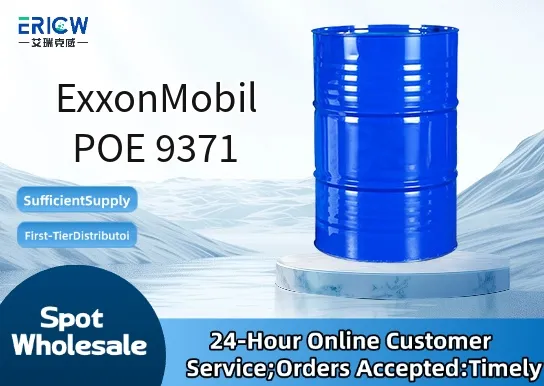
Highly stable polyolester (POE) base fluid engineered for extended service life in demanding refrigeration systems.
Excellent miscibility with HFC, HFO, and next-generation low-GWP refrigerants including R-1234yf and R-1234ze.
Superior thermal and oxidative stability under high-temperature compressor operation.
Low volatility and minimal acid formation, reducing risk of system corrosion and sludge deposition.
Consistent viscosity performance across wide operating temperature ranges, supporting reliable lubrication during cold-start and peak-load conditions.
Hermetic and semi-hermetic compressors in commercial refrigeration units.
Lubrication for centrifugal chillers using low-global-warming-potential (GWP) refrigerants.
Mobile air conditioning systems in automotive and rail applications.
Heat pump systems operating with HFC-134a, R-513A, and R-1234yf refrigerants.
Industrial process cooling equipment requiring long oil drain intervals and high reliability.
| Chemical Type | Polyolester (POE) synthetic lubricant |
| Product Form | Clear, amber liquid |
| Appearance | Homogeneous, transparent, free from sediment |
| Primary Applications | Refrigeration and air conditioning compressors |
| Key Features | Refrigerant miscibility, thermal stability, hydrolytic resistance |
| Benefits | Extended equipment life, reduced maintenance frequency, compatibility with modern refrigerants |
| Storage Stability | Stable under recommended dry, cool storage conditions (≤30°C) |
Q1: What is ExxonMobil POE 9371 and how does it differ from conventional plasticizers?
A: ExxonMobil POE 9371 is a polyolefin elastomer-based processing aid designed to enhance melt flow, reduce extrusion torque, and improve surface finish in rigid and semi-crystalline thermoplastics—particularly PVC, polyolefins, and engineering resins. Unlike traditional small-molecule plasticizers, it functions as a high-molecular-weight rheology modifier with excellent thermal stability and low volatility, offering permanent performance without migration or blooming.
Q2: Is POE 9371 compatible with PVC compounds containing metal-based stabilizers?
A: Yes, POE 9371 demonstrates good compatibility with common PVC heat stabilizer systems—including calcium-zinc, barium-cadmium, and organotin types—under typical compounding and processing conditions. It does not interfere with stabilization mechanisms and maintains compound integrity during high-shear mixing and extrusion.
Q3: How should POE 9371 be incorporated into a polymer formulation?
A: It is typically added during the dry-blend stage or introduced via side-feeding in extrusion. Due to its elastomeric nature, it disperses readily under moderate shear and generally ranges from 0.1% to 2% by weight depending on the base resin, processing equipment, and desired effect—such as improved output rate, reduced melt fracture, or enhanced gloss.
Q4: Does POE 9371 affect the mechanical properties of the final part?
A: At recommended use levels, POE 9371 has minimal impact on tensile strength and modulus in rigid formulations. In some cases, it may slightly increase impact resistance due to its elastomeric character, but significant property trade-offs are not expected when used within typical dosage ranges.
Contact With Us:
E-mail: wangxingqiang@ericwchem.com
Have a Questions? Call Us:
Add:
Building A1, Jiete Industrial Park, Huangpu District, Guangzhou City, Guangdong Province, China