English
 Español
 tiếng việt
 русский
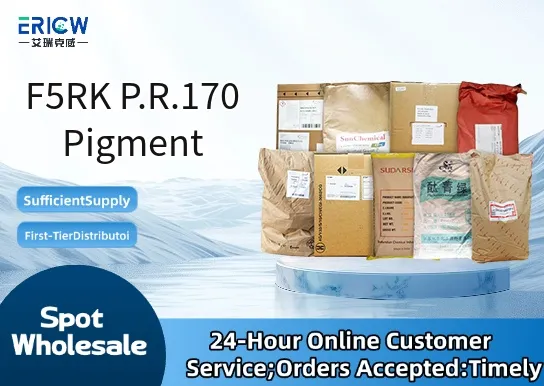
High chroma and excellent color strength for vibrant red shades.
Outstanding thermal stability suitable for high-temperature processing up to 280°C.
Good dispersibility in both polar and non-polar polymer matrices.
Excellent lightfastness (ISO 105-B02, Grade 7–8) and weather resistance.
Low volatility and minimal extractables, meeting stringent regulatory requirements for food-contact plastics.
Polyolefin masterbatches (PP, PE) for consumer packaging and automotive interior parts.
Engineering plastics including ABS, PS, and PC for electronic housings and appliances.
Food-grade rigid containers and caps requiring FDA-compliant colorants.
Industrial coatings requiring high-gloss, fade-resistant red pigmentation.
Textile fibers (polyester, nylon) in high-speed melt-spinning processes.
| Chemical Type | Azo pigment, calcium salt of naphthol AS derivative |
| Product Form | Fine free-flowing powder |
| Appearance | Reddish-orange powder with uniform particle size distribution |
| Primary Applications | Polyolefins, engineering thermoplastics, coatings, synthetic fibers |
| Key Features | Thermal stability, dispersibility, lightfastness, low extractables |
| Benefits | Consistent batch-to-batch color, reduced filter clogging, extended product service life |
| Regulatory Compliance | EU REACH compliant; meets FDA 21 CFR §178.3290 for polyolefins |
| Particle Size (D50) | 0.8–1.2 µm (by laser diffraction) |
Q1: What is the primary chemical class and typical hue profile of F5RK P.R.170 Pigment?
A: F5RK P.R.170 is a high-performance perylene-based red pigment, offering strong bluish-red shade with excellent chroma, lightfastness, and thermal stability. Its molecular structure provides inherent resistance to fading under UV exposure and elevated processing temperatures.
Q2: In which polymer systems is F5RK P.R.170 most commonly processed, and what are key dispersion considerations?
A: It is widely used in engineering thermoplastics such as polyesters, polyamides, and polyolefins, especially where high-temperature melt processing is required. Optimal performance depends on thorough dispersion—typically achieved via twin-screw extrusion or pre-dispersed masterbatch incorporation—to ensure uniform color development and avoid agglomeration-related defects.
Q3: Is F5RK P.R.170 suitable for applications requiring regulatory compliance for food contact or toys?
A: F5RK P.R.170 is not certified for direct food-contact or toy applications under major global frameworks (e.g., FDA 21 CFR, EU Plastics Regulation, or EN71-3). It is intended for industrial, automotive, and durable goods applications where regulatory requirements focus on migration resistance under non-food conditions.
Q4: How does F5RK P.R.170 perform under weathering and outdoor exposure?
A: Due to its perylene backbone, F5RK P.R.170 exhibits outstanding resistance to photodegradation, making it well-suited for long-term outdoor use in coated plastics and exterior automotive components. Performance is further enhanced when combined with appropriate UV stabilizers and hindered amine light stabilizers (HALS) in the final formulation.
Contact With Us:
E-mail: wangxingqiang@ericwchem.com
Have a Questions? Call Us:
Add:
Building A1, Jiete Industrial Park, Huangpu District, Guangzhou City, Guangdong Province, China