English
 Español
 tiếng việt
 русский
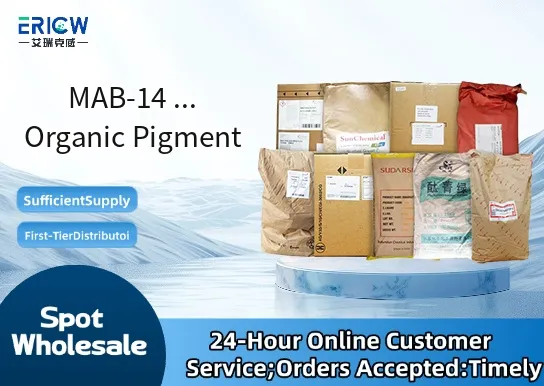
High color strength and excellent tinctorial efficiency in organic solvent-based systems.
Good thermal stability up to 220°C, suitable for medium-temperature processing.
Outstanding lightfastness (rated 7–8 on ISO 105-B02 scale) in demanding outdoor applications.
Low migration tendency in PVC and polyolefin compounds, ensuring color consistency over time.
Free-flowing powder form with consistent particle size distribution for uniform dispersion.
Automotive interior plastics including dashboards and trim components.
Industrial coatings for metal and plastic substrates requiring weather resistance.
PVC window profiles and siding where long-term UV stability is critical.
Masterbatch formulations for injection-molded consumer goods.
Printing inks for flexible packaging requiring high chroma and gloss retention.
| Chemical Type | Azo pigment (disazo condensation type) |
| Product Form | Free-flowing fine powder |
| Appearance | Reddish-brown free-flowing powder |
| Primary Applications | Plastics, coatings, inks |
| Key Features | High opacity, good heat stability, low volatility |
| Benefits | Reduced dosage requirement, improved batch-to-batch reproducibility |
| Storage Conditions | Store in cool, dry, well-ventilated area away from direct sunlight |
| Regulatory Compliance | REACH registered; compliant with EU Directive 2002/61/EC for colorants |
Q1: What are the primary application areas for MAB-14 organic pigment?
A: MAB-14 is widely used in high-performance industrial coatings, automotive refinish systems, and engineering plastics where excellent chroma, thermal stability, and lightfastness are required. It is also suitable for selected ink formulations demanding good dispersion and color strength.
Q2: How should MAB-14 be dispersed for optimal performance?
A: Optimal dispersion is achieved using high-shear mixing or bead milling in compatible solvents or polymer matrices. Pre-wetting with a suitable dispersant is recommended to ensure uniform distribution and maximize color development and transparency.
Q3: Is MAB-14 suitable for food-contact applications?
A: MAB-14 is not intended for direct food-contact applications unless explicitly approved under applicable regulatory frameworks. Its use in packaging inks or coatings requires case-by-case evaluation by qualified regulatory experts and confirmation of compliance with relevant regional requirements.
Q4: What is the typical dosage range when using MAB-14 in polymer systems?
A: Dosage depends on formulation requirements and desired shade intensity, but it is typically used at low concentrations—generally ranging from 0.1% to 2% by weight in thermoplastics and thermosets. Lower loadings often suffice due to its high tinting strength.
Contact With Us:
E-mail: wangxingqiang@ericwchem.com
Have a Questions? Call Us:
Add:
Building A1, Jiete Industrial Park, Huangpu District, Guangzhou City, Guangdong Province, China