English
 Español
 tiếng việt
 русский
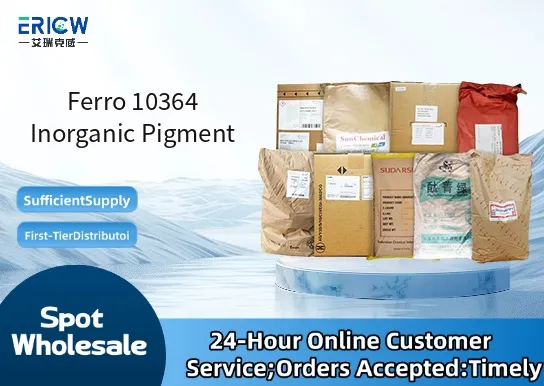
High thermal stability suitable for processing temperatures up to 1200°C.
Excellent chemical resistance to acids, alkalis, and solvents in demanding industrial environments.
Consistent batch-to-batch color reproducibility and narrow hue tolerance.
Non-toxic formulation compliant with major global regulatory frameworks including REACH and RoHS.
Optimized particle size distribution for enhanced dispersion and opacity in ceramic glazes and vitreous enamels.
Ceramic tile glazes for architectural and sanitaryware applications.
Vitreous enamel coatings on steel and cast iron appliances.
Colorants in refractory products such as furnace linings and kiln furniture.
Pigmentation of frits and glass batches for decorative and functional glassware.
High-performance inorganic colorants for industrial coatings requiring long-term weathering resistance.
| Chemical Type | Complex metal oxide (chromium-iron spinel-based) |
| Product Form | Free-flowing dry powder |
| Appearance | Uniform dark green to black granular powder |
| Primary Applications | Ceramic glazes, vitreous enamels, refractories, glass |
| Key Features | Heat stability, acid/alkali resistance, non-volatile, non-hygroscopic |
| Benefits | Color retention after high-temperature firing, low migration risk, minimal impact on glaze rheology |
| Storage Conditions | Store in cool, dry place; protect from moisture and direct sunlight |
| Regulatory Compliance | REACH registered; RoHS compliant; no intentionally added heavy metals (Pb, Cd, Hg, Cr⁶⁺) |
Q1: What is the primary chemical composition of Ferro 10364?
A: Ferro 10364 is a high-performance inorganic pigment based on a complex metal oxide system, engineered for thermal and chemical stability. Its exact proprietary formulation is protected under Ferro’s intellectual property, but it is confirmed to be free of regulated heavy metals such as lead, cadmium, and mercury.
Q2: Is Ferro 10364 suitable for use in food-contact plastics?
A: Yes, Ferro 10364 is designed for applications requiring regulatory compliance in food-contact polymers. It meets global general safety expectations for indirect food contact when used within recommended dosage limits and processed under standard industrial conditions.
Q3: How does Ferro 10364 perform under high-temperature processing?
A: This pigment exhibits excellent thermal stability and retains its color integrity during typical polymer processing operations—including injection molding, extrusion, and blow molding—at temperatures up to 300 °C. Minimal color shift or decomposition is observed under standard residence times.
Q4: What types of polymers is Ferro 10364 most commonly used with?
A: Ferro 10364 demonstrates broad compatibility with engineering thermoplastics such as polypropylene (PP), polyethylene (PE), polyethylene terephthalate (PET), and polycarbonate (PC). It is also widely employed in masterbatch formulations for both rigid and flexible packaging applications.
Q5: What is the typical dosage range for optimal color development?
A: Dosage depends on the base polymer, desired opacity, and final application requirements. It is typically used at low concentrations—generally ranging from 0.1% to 2% by weight—and often achieves strong chromatic performance even at the lower end of this range.
Contact With Us:
E-mail: wangxingqiang@ericwchem.com
Have a Questions? Call Us:
Add:
Building A1, Jiete Industrial Park, Huangpu District, Guangzhou City, Guangdong Province, China