English
 Español
 tiếng việt
 русский
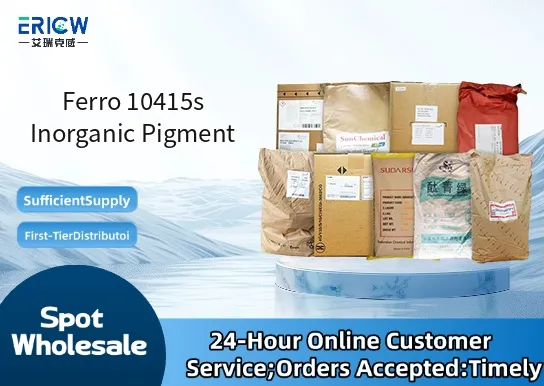
High thermal stability suitable for processing temperatures up to 1200°C.
Excellent chemical resistance to acids, alkalis, and solvents in demanding industrial environments.
Consistent color reproducibility batch-to-batch, certified under ISO 9001 manufacturing controls.
Low heavy metal content, compliant with EU RoHS and REACH regulatory requirements.
Optimized particle size distribution for enhanced dispersion and opacity in ceramic glazes and enamels.
Ceramic tile glazes for architectural and sanitaryware applications.
Porcelain enamel coatings on steel and cast iron substrates.
High-fire stoneware and vitrified porcelain bodies.
Colorants in refractory mortars and kiln furniture coatings.
Decorative inks for digital ceramic printing on glazed surfaces.
| Chemical Type | Mixed-metal oxide (cobalt-chromium-iron spinel) |
| Product Form | Fine dry powder |
| Appearance | Uniform dark gray to black granular powder |
| Primary Applications | Ceramic glazes, porcelain enamels, high-temperature coatings |
| Key Features | Thermal stability, acid/alkali resistance, low volatility |
| Benefits | Color consistency, minimal firing atmosphere sensitivity, low sintering shrinkage |
| Storage Conditions | Store in cool, dry, well-ventilated area; protect from moisture and contamination |
| Regulatory Compliance | RoHS Directive 2011/65/EU, REACH SVHC-free, non-hazardous per GHS |
Q1: What is the primary chemical composition of Ferro 10415s?
A: Ferro 10415s is a mixed-metal oxide pigment based on iron and chromium, formulated to deliver stable, heat-resistant brown-to-black hues. Its inorganic matrix ensures high thermal stability and low solubility in common polymer and ceramic processing environments.
Q2: Is Ferro 10415s suitable for food-contact plastics or ceramics?
A: Yes — Ferro 10415s is designed for use in applications requiring regulatory compliance for indirect food contact, including polyolefins, polyesters, and vitreous enamel coatings. It meets general requirements for heavy metal limits under global food-contact guidelines when used within recommended dosage ranges and appropriate processing conditions.
Q3: How does Ferro 10415s perform under high-temperature processing?
A: This pigment exhibits excellent thermal stability, retaining its color integrity and chemical structure during melt processing of engineering thermoplastics (e.g., up to 300°C) and during ceramic firing cycles (typically up to 1200°C). Minimal color shift or degradation is observed under standard industrial heating profiles.
Q4: What is the typical dosage range for optimal color development?
A: Dosage depends on the base material, desired opacity, and final shade intensity, but Ferro 10415s is generally effective at low concentrations — typically ranging from 0.1% to 2% by weight in polymers and glazes. Lower loadings often suffice for deep brown tones, while higher amounts may be used for jet-black effects in opaque systems.
Contact With Us:
E-mail: wangxingqiang@ericwchem.com
Have a Questions? Call Us:
Add:
Building A1, Jiete Industrial Park, Huangpu District, Guangzhou City, Guangdong Province, China