English
 Español
 tiếng việt
 русский
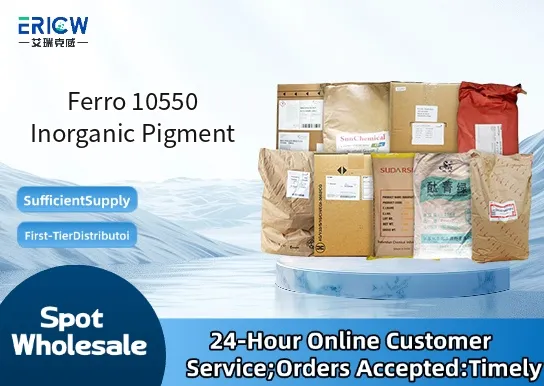
High thermal stability suitable for processing temperatures up to 1200°C.
Excellent chemical resistance to acids, alkalis, and solvents in demanding industrial environments.
Consistent batch-to-batch color reproducibility and narrow hue tolerance.
Non-toxic formulation compliant with global regulatory frameworks including REACH and RoHS.
Optimized particle size distribution for enhanced dispersion and opacity in matrix systems.
Ceramic glazes and frits for architectural tiles and tableware.
Coloration of refractory materials including kiln furniture and furnace linings.
Pigmentation of high-performance glass enamels and decorative coatings.
Stabilized colorant in phosphate-based and borosilicate glass compositions.
Functional pigment in heat-resistant polymer composites for automotive under-hood components.
| Chemical Type | Mixed metal oxide (chromium-iron spinel) |
| Product Form | Free-flowing fine powder |
| Appearance | Dark green to black granular powder |
| Primary Applications | Ceramics, refractories, glass, high-temp coatings |
| Key Features | Thermal stability, UV inertness, non-volatile |
| Benefits | No blooming, minimal migration, long-term color retention |
| pH Range (10% aqueous slurry) | 6.5 – 8.0 |
| Moisture Content (wt%) | ≤ 0.5% |
Q1: What is the primary chemical composition of Ferro 10550?
A: Ferro 10550 is a high-performance inorganic pigment based on a complex metal oxide system, engineered for thermal and chemical stability. Its exact formulation is proprietary, but it contains no heavy metals of concern such as lead, cadmium, or mercury, and complies with global regulatory expectations for industrial pigments.
Q2: Is Ferro 10550 suitable for use in food-contact plastics?
A: While Ferro 10550 is not specifically certified for direct food contact, its inorganic nature, absence of volatile organic components, and robust thermal stability make it a candidate for evaluation in indirect food-contact applications—subject to full regulatory assessment by the end-user’s compliance team and applicable jurisdictional requirements.
Q3: How does Ferro 10550 perform under high-temperature processing conditions?
A: Ferro 10550 exhibits excellent thermal stability and retains color integrity during standard polymer processing operations—including injection molding, extrusion, and compounding—at temperatures up to 300 °C. It shows minimal degradation or blooming in thermoplastics and engineering resins.
Q4: What dispersion methods are recommended for optimal performance?
A: For best results, Ferro 10550 should be incorporated using high-shear mixing or twin-screw compounding. Pre-dispersed masterbatches are also commonly used to ensure uniform distribution and maximize color strength and consistency across production batches.
Q5: Can Ferro 10550 be used in UV-stabilized systems?
A: Yes—Ferro 10550 demonstrates inherent UV resistance due to its inorganic crystalline structure. When formulated alongside appropriate UV absorbers or HALS stabilizers, it maintains long-term color stability in outdoor and light-exposed applications.
Contact With Us:
E-mail: wangxingqiang@ericwchem.com
Have a Questions? Call Us:
Add:
Building A1, Jiete Industrial Park, Huangpu District, Guangzhou City, Guangdong Province, China