English
 Español
 tiếng việt
 русский
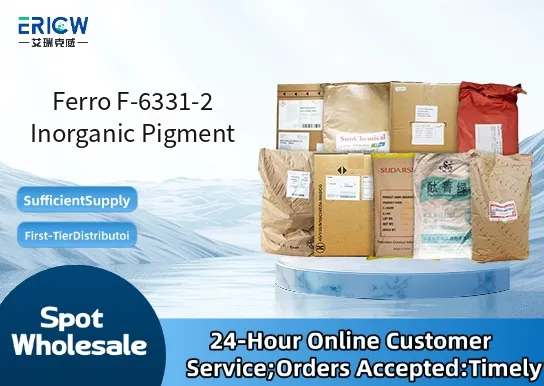
High thermal stability up to 1000 °C, maintaining color integrity under extreme processing conditions.
Excellent UV resistance and lightfastness, ensuring long-term color retention in outdoor applications.
Chemically inert and non-reactive with common binders, resins, and ceramic glazes.
Low solubility in water and organic solvents, supporting compliance with stringent environmental and safety standards.
Consistent particle size distribution for uniform dispersion and optimal opacity in host matrices.
Ceramic glazes and engobes for architectural tiles and sanitaryware.
High-performance refractory coatings used in kiln furniture and furnace linings.
Colorants in vitreous enamels for appliance panels and industrial metal substrates.
Pigmentation of inorganic-based construction materials including concrete pavers and fiber-cement boards.
Functional coloring agent in technical glass formulations requiring heat and chemical durability.
| Chemical Type | Mixed-metal oxide (chromium-iron spinel based) |
| Product Form | Fine dry powder |
| Appearance | Dark green to black granular powder |
| Primary Applications | Ceramics, refractories, enamels, and inorganic construction materials |
| Key Features | Heat stability, acid/alkali resistance, non-toxic, heavy-metal-free |
| Benefits | Color consistency across firing cycles, low volatility, minimal batch-to-batch variation |
| Storage Conditions | Store in cool, dry, well-ventilated area; protect from moisture and contamination |
Q1: What is the primary chemical composition and classification of Ferro F-6331-2?
A: Ferro F-6331-2 is a high-performance inorganic pigment based on a complex metal oxide system, engineered for thermal and chemical stability. It is classified as a mixed-metal oxide pigment, not a simple iron oxide or chromite, and is designed to deliver consistent coloration without organic dye limitations.
Q2: Is Ferro F-6331-2 suitable for use in food-contact plastics or coatings?
A: Ferro F-6331-2 is formulated to meet general regulatory expectations for inorganic pigments in indirect food-contact applications, such as packaging substrates. Its compliance depends on final formulation, processing conditions, and regional regulatory requirements—users must validate suitability through full regulatory assessment and migration testing appropriate to their specific application.
Q3: How does Ferro F-6331-2 perform under high-temperature processing conditions?
A: This pigment exhibits excellent thermal stability and retains its color integrity during standard polymer processing—including injection molding, extrusion, and calendering—up to temperatures exceeding 300 °C. It shows minimal color shift or decomposition under typical industrial residence times and shear profiles.
Q4: What dispersion methods are recommended for optimal color development?
A: For best results, Ferro F-6331-2 should be pre-dispersed using high-shear mixing or twin-screw compounding. It responds well to standard dispersants used with inorganic pigments and achieves uniform distribution at typical loadings—generally ranging from 0.1% to 2% by weight, depending on substrate and desired opacity.
Contact With Us:
E-mail: wangxingqiang@ericwchem.com
Have a Questions? Call Us:
Add:
Building A1, Jiete Industrial Park, Huangpu District, Guangzhou City, Guangdong Province, China