English
 Español
 tiếng việt
 русский
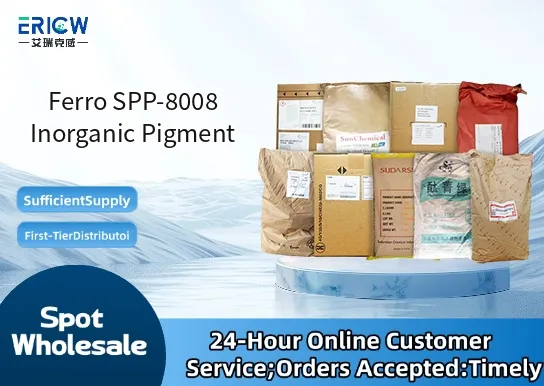
High thermal stability suitable for processing temperatures up to 1000 °C.
Excellent UV and weather resistance for long-term outdoor performance.
Non-toxic, heavy-metal-free formulation compliant with global regulatory standards.
Consistent particle size distribution ensuring uniform dispersion and color strength.
Chemically inert in alkaline and neutral environments, enhancing compatibility with cementitious and ceramic systems.
Coloration of architectural concrete and precast concrete elements.
Pigmentation of ceramic glazes and frits for sanitaryware and tiles.
Staining of refractory mortars and monolithic linings in high-temperature industrial furnaces.
Permanent coloring agent in inorganic binders such as sodium silicate and phosphate-based cements.
Functional pigment in fire-resistant coatings and intumescent systems.
| Chemical Type | Complex metal oxide (spinel structure) |
| Product Form | Fine dry powder |
| Appearance | Free-flowing reddish-brown granular powder |
| Primary Applications | Cementitious materials, ceramics, refractories, inorganic coatings |
| Key Features | Heat stability, lightfastness, alkali resistance, low solubility |
| Benefits | Color consistency, minimal batch variation, no bleeding or migration |
| pH Stability Range | 5–13 (stable in alkaline matrices) |
| Storage Conditions | Store in cool, dry, well-ventilated area; protect from moisture |
Q1: What is the primary chemical composition of Ferro SPP-8008?
A: Ferro SPP-8008 is a high-performance inorganic pigment based on a complex metal oxide system, engineered for thermal and chemical stability. Its exact composition is proprietary to Ferro Corporation and optimized for consistent color development and dispersion behavior in demanding polymer and ceramic applications.
Q2: Is SPP-8008 suitable for food-contact plastics?
A: SPP-8008 is formulated to meet applicable global regulatory expectations for pigments used in food-contact polymers, including compliance with FDA 21 CFR §178.3297 and relevant EU framework requirements for inorganic colorants. Final regulatory clearance depends on the complete formulation, processing conditions, and end-use application, and users are responsible for verifying suitability with their regulatory team.
Q3: How does SPP-8008 perform under high-temperature processing conditions?
A: SPP-8008 exhibits excellent thermal stability and retains its color integrity during high-shear compounding and melt processing up to approximately 300 °C, making it well-suited for engineering thermoplastics such as polyamide, PBT, and polyphenylene sulfide.
Q4: What is the recommended method for incorporating SPP-8008 into polymer systems?
A: For optimal dispersion and color uniformity, SPP-8008 is typically introduced via masterbatch or dry-blend compounding. Pre-dispersed masterbatches are strongly recommended for high-clarity or high-gloss applications. Direct addition may require extended mixing time and higher shear to achieve full deagglomeration.
Q5: Does SPP-8008 contain heavy metals regulated under RoHS or REACH?
A: SPP-8008 is manufactured without intentionally added lead, cadmium, mercury, or hexavalent chromium, and conforms to RoHS Directive (2011/65/EU) and REACH SVHC screening criteria. It is not classified as hazardous under GHS and presents no known bioaccumulation or ecotoxicological concerns when used as directed.
Contact With Us:
E-mail: wangxingqiang@ericwchem.com
Have a Questions? Call Us:
Add:
Building A1, Jiete Industrial Park, Huangpu District, Guangzhou City, Guangdong Province, China