English
 Español
 tiếng việt
 русский
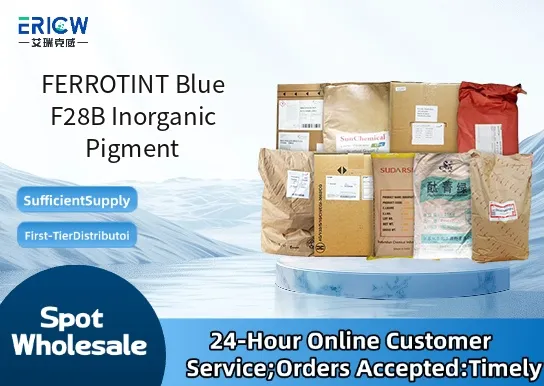
High thermal stability suitable for processing temperatures up to 600 °C.
Excellent chemical resistance to acids, alkalis, and solvents.
Non-toxic formulation compliant with global regulatory standards for industrial pigments.
Consistent batch-to-batch color reproducibility and high chroma blue hue.
Low oil absorption enabling efficient dispersion in inorganic binder systems.
Ceramic glazes and underglaze decorations.
High-temperature resistant coatings for architectural and industrial substrates.
Coloration of refractory materials including fireclay and alumina-based products.
Pigmentation of glass enamels and frits.
Stabilized coloring agent in cementitious and mineral-based construction materials.
| Chemical Type | Cobalt-aluminum spinel (CoAl₂O₄) |
| Product Form | Fine dry powder |
| Appearance | Deep blue to violet-blue granular powder |
| Primary Applications | Ceramics, refractories, high-temp coatings, glass enamels |
| Key Features | Thermal stability, UV resistance, inertness in alkaline environments |
| Benefits | No blooming, minimal migration, long-term color retention |
| Density | Approx. 4.1 g/cm³ |
| Particle Size (D50) | 1.2–1.8 µm |
Q1: What is the primary chemical composition of FERROTINT Blue F28B?
A: FERROTINT Blue F28B is a high-performance inorganic pigment based on a modified cobalt aluminate spinel structure, engineered for exceptional thermal stability and chemical resistance. It contains no heavy metals of concern such as lead, cadmium, or mercury, and is formulated to meet current global regulatory expectations for industrial pigments.
Q2: Is FERROTINT Blue F28B suitable for high-temperature applications like engineering plastics or ceramic glazes?
A: Yes — FERROTINT Blue F28B is specifically designed for demanding thermal environments. It retains its intense blue hue and structural integrity at processing temperatures up to 1200 °C, making it well-suited for coloration of polyamide, polyphenylene sulfide (PPS), and other high-heat polymers, as well as ceramic bodies and frit-based glazes.
Q3: How does FERROTINT Blue F28B compare to organic blue pigments in terms of weathering and UV resistance?
A: Unlike many organic blues, FERROTINT Blue F28B exhibits outstanding lightfastness, UV stability, and resistance to atmospheric pollutants due to its fully inorganic crystalline lattice. It shows negligible fading or chalking even after prolonged outdoor exposure, making it preferred for exterior architectural coatings, automotive finishes, and durable plastic components.
Q4: Can FERROTINT Blue F28B be dispersed in water-based systems?
A: Yes — with appropriate surface treatment and dispersion aids, FERROTINT Blue F28B can be effectively stabilized in aqueous media. It is commonly used in waterborne architectural paints, industrial coatings, and inkjet inks where long-term colloidal stability and low sedimentation are required.
Q5: What is the typical dosage range when using FERROTINT Blue F28B in polymer masterbatches?
A: Dosage depends on the desired shade intensity and base polymer, but FERROTINT Blue F28B is typically used at low concentrations due to its high tinting strength and opacity. In most thermoplastic masterbatches, effective loading generally ranges from 0.1% to 2% by weight.
Contact With Us:
E-mail: wangxingqiang@ericwchem.com
Have a Questions? Call Us:
Add:
Building A1, Jiete Industrial Park, Huangpu District, Guangzhou City, Guangdong Province, China