English
 Español
 tiếng việt
 русский
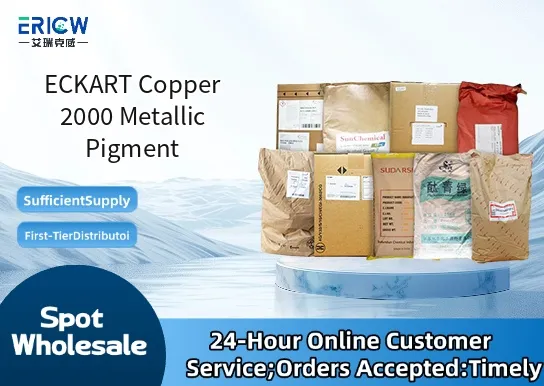
Highly reflective, spherical copper particles for exceptional metallic brilliance and uniform orientation.
Optimized particle size distribution ensuring excellent dispersion stability in solvent-based and UV-curable systems.
Surface-stabilized with proprietary organic coating to prevent oxidation and enhance storage stability.
Low viscosity impact—enables high pigment loading without compromising flow or sprayability.
Consistent batch-to-batch color performance validated under ISO 9001-certified production.
Automotive OEM and refinish coatings requiring durable, high-gloss copper effects.
Plastic coloring for consumer electronics housings and decorative automotive interior trim.
Industrial coil coatings for architectural metal panels and façade systems.
Printing inks for premium packaging, including luxury cosmetics and beverage cans.
Specialty powder coatings for outdoor furniture and architectural hardware.
| Chemical Type | Electrolytically produced spherical copper |
| Product Form | Free-flowing dry powder |
| Appearance | Reddish-gold metallic powder with bright luster |
| Primary Applications | Coatings, inks, and plastics (solvent-based, UV-curable, and powder systems) |
| Key Features | Spherical morphology, oxidation-resistant surface treatment |
| Benefits | Enhanced metallic effect, improved dispersion, reduced sedimentation |
| Storage Conditions | Store in original sealed container at 15–25 °C, low humidity, away from oxidizing agents |
| Compliance | REACH registered; RoHS compliant; no intentionally added heavy metals |
Q1: What is the primary particle morphology and surface treatment of ECKART Copper 2000?
A: ECKART Copper 2000 features thin, high-aspect-ratio flake particles with a controlled particle size distribution optimized for metallic effect and dispersion stability. It is supplied with a proprietary organic surface treatment designed to enhance compatibility with common solvent-based and high-solids coating systems.
Q2: Is ECKART Copper 2000 suitable for water-based coatings?
A: While primarily developed and validated for solvent-borne systems, ECKART Copper 2000 can be incorporated into certain water-based formulations—especially when used with appropriate dispersants and pH-stabilized resins. Performance and long-term stability should be verified through application-specific testing.
Q3: How does ECKART Copper 2000 compare to standard copper pigments in terms of oxidation resistance?
A: ECKART Copper 2000 offers improved oxidative stability compared to untreated copper flakes due to its tailored surface protection layer. However, it remains a non-passivated copper pigment and is not intended for long-term outdoor exposure without top-coating or encapsulation in a protective binder system.
Q4: What are recommended dispersion methods for optimal orientation and metallic effect?
A: For best results, use low-shear mixing followed by gentle homogenization—avoid high-speed dissolvers or bead mills that may damage flake integrity. Pre-wetting with compatible solvents and staged addition into the vehicle help achieve uniform orientation and maximize reflectivity.
Q5: Can ECKART Copper 2000 be used in thermoplastic compounds?
A: Yes—it has been successfully processed in selected thermoplastics such as ABS, PS, and certain engineering polymers at temperatures below the onset of significant thermal degradation. Compatibility and pigment retention during melt compounding depend on resin polarity, shear history, and thermal residence time; pilot trials are recommended.
Contact With Us:
E-mail: wangxingqiang@ericwchem.com
Have a Questions? Call Us:
Add:
Building A1, Jiete Industrial Park, Huangpu District, Guangzhou City, Guangdong Province, China