English
 Español
 tiếng việt
 русский
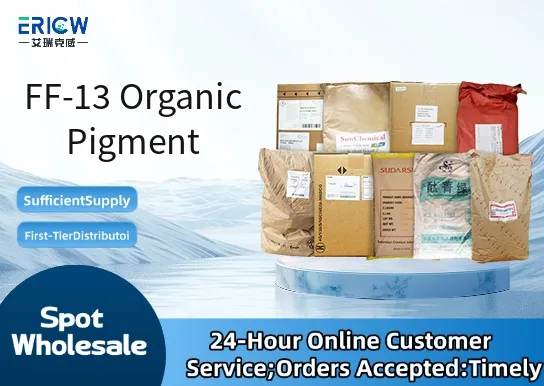
High chromatic strength with excellent color purity in red-orange shade.
Outstanding thermal stability up to 220°C, suitable for high-temperature processing.
Good lightfastness (ASTM Level 7–8) and weather resistance in outdoor applications.
Low volatility and negligible migration in polymer matrices.
Compatible with major thermoplastics including PP, PE, PS, and ABS.
Coloration of polyolefin fibers and spunbond nonwovens.
Automotive interior plastics requiring long-term UV stability.
Masterbatch formulations for injection-molded consumer goods.
PVC rigid profiles and window systems.
Engineering plastic components in electronics housings.
| Chemical Type | Azo pigment (Benzimidazolone derivative) |
| Product Form | Free-flowing powder |
| Appearance | Red-orange fine powder |
| Primary Applications | Polyolefins, PVC, engineering plastics |
| Key Features | Thermal stability, low migration, high tinctorial strength |
| Benefits | Consistent batch-to-batch color, easy dispersion, low dust generation |
| Particle Size (D50) | 0.15–0.25 µm |
| Heat Resistance | ≤220°C (10 min, no significant color shift) |
Q1: What are the primary application areas for FF-13 Organic Pigment?
A: FF-13 is widely used in high-performance industrial coatings, automotive refinish systems, and engineering plastics where strong chroma, excellent lightfastness, and thermal stability are required. It is also suitable for select ink formulations demanding vivid red-to-magenta hues and good dispersibility.
Q2: How does FF-13 perform under elevated temperature conditions?
A: FF-13 exhibits good thermal stability, maintaining color integrity during standard polymer processing operations such as injection molding and extrusion. Its decomposition onset typically begins above 250 °C, making it compatible with common thermoplastics including ABS, PS, and certain polyolefin blends.
Q3: Is FF-13 suitable for use in food-contact plastic applications?
A: FF-13 is not certified for direct food-contact applications under major regulatory frameworks. It is intended for non-food-contact industrial and decorative uses. Customers requiring food-safe colorants should consult our dedicated food-grade pigment portfolio and verify compliance with applicable local regulations.
Q4: What is the recommended dispersion method for optimal performance in solvent-based coatings?
A: For solvent-based systems, high-shear dispersing using media mills or high-speed dissolvers is recommended. Pre-wetting with compatible solvents (e.g., aromatic hydrocarbons or ketones) followed by controlled milling ensures uniform particle distribution and maximizes color strength and gloss retention.
Contact With Us:
E-mail: wangxingqiang@ericwchem.com
Have a Questions? Call Us:
Add:
Building A1, Jiete Industrial Park, Huangpu District, Guangzhou City, Guangdong Province, China