English
 Español
 tiếng việt
 русский
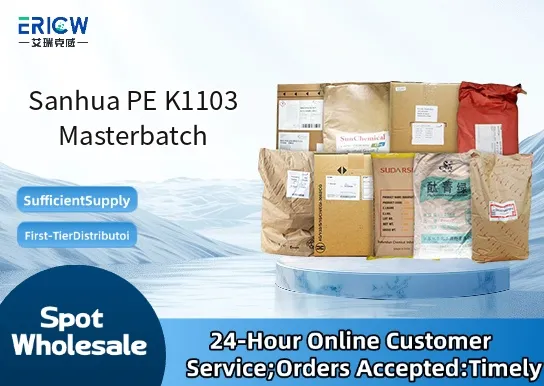
Highly concentrated polyethylene-based masterbatch with excellent dispersion performance in PE resins.
Thermally stable formulation suitable for extrusion and injection molding processes up to 240°C.
Low migration and blooming resistance, ensuring long-term color and additive stability in final products.
Free-flowing granular form with consistent bulk density for precise gravimetric dosing.
Compliant with FDA 21 CFR §178.2010 for indirect food contact applications (subject to final formulation verification).
Blow-molded HDPE bottles and containers for household and personal care products.
Extruded PE pipes and fittings for cold-water distribution systems.
Injection-molded caps, closures, and packaging components.
Thermoformed PE trays and clamshells for fresh produce and bakery packaging.
Rotational-molded tanks and industrial parts requiring UV-stabilized PE compounds.
| Chemical Type | Polyethylene (LDPE/LLDPE) carrier-based masterbatch |
| Product Form | Free-flowing cylindrical granules (3.0–4.5 mm length) |
| Appearance | Uniform colored granules, no dust or agglomerates |
| Melt Flow Rate (190°C/2.16 kg) | 12–18 g/10 min |
| Moisture Content | ≤ 0.15 wt% |
| Heavy Metals (Pb, Cd, Hg, Cr⁶⁺) | Complies with RoHS Directive 2011/65/EU |
| Recommended Addition Rate | 1.5–4.0 wt% depending on end-use requirements |
| Storage Conditions | Store in dry, ventilated area at ≤30°C; use within 12 months of production date |
Q1: What is the primary function of Sanhua PE K1103 Masterbatch?
A: Sanhua PE K1103 Masterbatch is a polyethylene-based additive concentrate designed to enhance melt flow behavior and improve processability during extrusion and injection molding of PE resins. It supports consistent dispersion and contributes to smoother surface finish in final parts.
Q2: Which PE resin types is K1103 compatible with?
A: K1103 is formulated for compatibility with a broad range of polyethylene grades, including LDPE, LLDPE, and HDPE. It demonstrates good dispersion stability across varying molecular weight distributions and density ranges typical of industrial PE feedstocks.
Q3: How should K1103 be incorporated into the production process?
A: K1103 is added directly to the base PE resin using standard gravimetric or volumetric dosing systems. It is recommended to pre-blend with the carrier resin prior to feeding into the extruder or injection molder to ensure uniform distribution. No pre-drying is required under normal ambient conditions.
Q4: Does K1103 affect the mechanical properties of the final PE product?
A: When used within recommended dosage ranges, K1103 does not significantly compromise tensile strength, impact resistance, or elongation at break. Its low-additive-load design helps maintain the inherent mechanical integrity of the host PE matrix while improving processing efficiency.
Q5: Is K1103 suitable for applications requiring regulatory compliance for food contact or hygiene-sensitive uses?
A: K1103 is formulated using components commonly accepted in food-contact-grade polymer additives. However, final regulatory compliance depends on the complete formulation, processing conditions, and end-use requirements. Customers are advised to conduct full regulatory validation specific to their application and jurisdiction.
Contact With Us:
E-mail: wangxingqiang@ericwchem.com
Have a Questions? Call Us:
Add:
Building A1, Jiete Industrial Park, Huangpu District, Guangzhou City, Guangdong Province, China