English
 Español
 tiếng việt
 русский
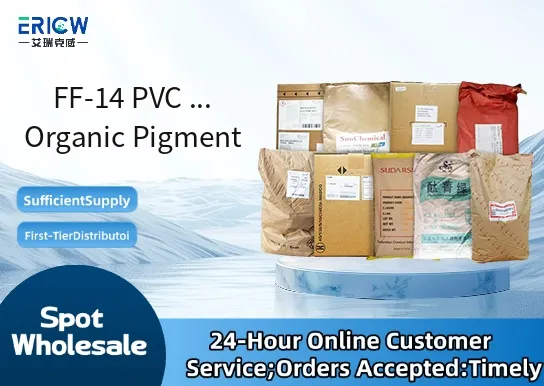
High thermal stability suitable for PVC processing up to 180 °C.
Excellent dispersion performance in rigid and flexible PVC compounds.
Good lightfastness (rated ISO 105-B02: 6–7) under indoor UV exposure.
Low migration tendency, minimizing bleed-out in plasticized PVC formulations.
Non-hazardous formulation compliant with REACH Annex XVII and RoHS directives.
Rigid PVC profiles for window frames and siding.
PVC flooring and wall coverings.
Wire & cable insulation and jacketing compounds.
PVC medical tubing requiring color consistency and biocompatibility support.
Automotive interior trims and dash components.
| Chemical Type | Condensation-type azo pigment |
| Product Form | Free-flowing powder |
| Appearance | Reddish-orange fine powder |
| Primary Applications | PVC (rigid & flexible), chlorinated polyethylene (CPE) |
| Key Features | Thermally stable, low dusting, high tinting strength |
| Benefits | Consistent batch-to-batch color, minimal filter clogging during extrusion |
| Recommended Loading Range | 0.5–3.0 phr (parts per hundred resin) |
| Storage Conditions | Store in cool, dry place; avoid direct sunlight and moisture |
Q1: What is the primary application suitability of FF-14 in PVC systems?
A: FF-14 is specifically engineered for use in rigid and flexible PVC compounds, offering excellent thermal stability during processing and strong chromatic performance in extruded, calendered, and injection-molded products.
Q2: How does FF-14 perform under high-shear and elevated-temperature processing conditions typical of PVC compounding?
A: FF-14 demonstrates robust resistance to shear-induced degradation and thermal decomposition up to standard PVC processing temperatures, maintaining consistent color strength and minimizing pigment blooming or plate-out.
Q3: Is FF-14 compatible with common PVC stabilizer systems, including calcium-zinc and organotin formulations?
A: Yes — FF-14 exhibits broad compatibility with conventional PVC heat stabilizers and shows no adverse interaction that compromises either pigment performance or stabilization efficiency.
Q4: What is the typical dosage range for achieving optimal coloration in PVC without affecting mechanical properties?
A: FF-14 is typically used at low concentrations, generally ranging from 0.1% to 2% by weight of the PVC compound, depending on the desired shade intensity and base formulation requirements.
Contact With Us:
E-mail: wangxingqiang@ericwchem.com
Have a Questions? Call Us:
Add:
Building A1, Jiete Industrial Park, Huangpu District, Guangzhou City, Guangdong Province, China